
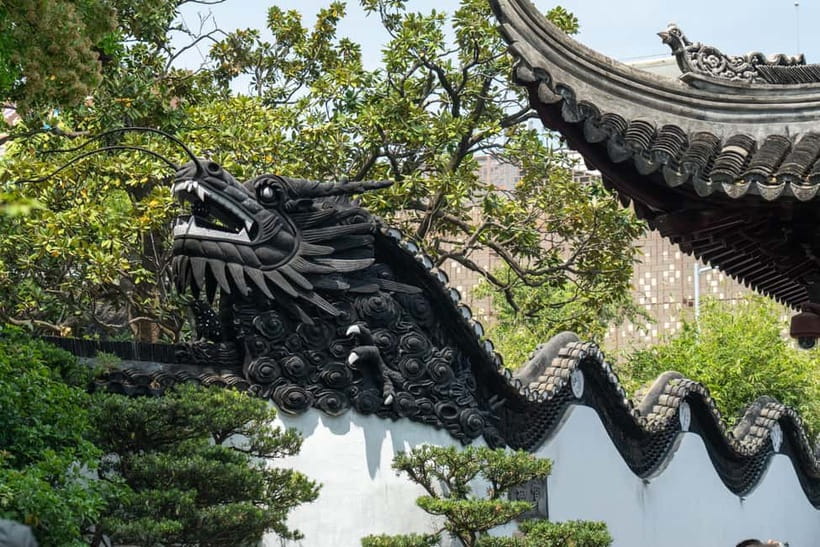
Reviewed · YU GARDEN & OLD TOWN
Shanghai: Yuyuan, City God Temple Old City Tour-Tip Based
Shanghai’s old streets tell stories fast. This tip-based route through Yuyuan and the City God Temple turns what looks like sightseeing into something you can actually explain after you leave.
I especially like two moments: the zodiac stops, where you can spot the 12 animals and their costumes, and the Traditional Chinese Medicine shop stop at Tonghan Chuntang, where you get a guided sampling of the “king of herbs.” It’s unusual, hands-on, and easy to follow with an English guide like Jie.
One consideration: it’s a walking tour, and it’s not suitable for mobility impairments, so wear comfortable shoes and keep an eye on your belongings.
In This Review
- Key things to know before you go
- Yuyuan and the City God Temple: the fastest way to understand Shanghai’s old-city beliefs
- Finding the tour: Yuyuan Garden station and the red umbrella idea
- Stop 1: Yuyuan Old Street—where you orient yourself (and see daily life)
- Stop 2: Tonghan Chuntang—traditional Chinese medicine with a real taste
- Stop 3: City God Temple of Shanghai—Taoism and folk religion, explained in plain terms
- Between the temple and the tea house: the 9 Zig-Zag Bridge and Mid-Lake Pavilion
- Stop 4: Lake Pavilion Tea House—small-time reflection, guided by context
- Stop 5: Yuyuan Garden Smallware—souvenirs that feel like local craft
- Stop 6: Shanghai Ancient City Park—releasing the energy, finishing peacefully
- The best value: what you’re getting for a very low ticket price
- Who should book this tour
- Should you book: my practical take
- FAQ
- How long is the tour?
- Is the tour guided in English?
- How many people are in the group?
- Where do we meet, and how do we find the guide?
- What are the main stops on the route?
- Is traditional medicinal herb sampling included?
- What are the cancellation and payment options?
Key things to know before you go
- Small group up to 10 people means questions don’t get lost.
- English live guide (Jie) makes temple and Taoism details feel practical.
- 12 zodiac animals show up as visuals you can remember, not a lecture.
- Medicinal herb sampling at Tonghan Chuntang adds a real-world taste of tradition.
- Yuyuan Gardens area landmarks pair stories with scenic bridges and pavilions.
Yuyuan and the City God Temple: the fastest way to understand Shanghai’s old-city beliefs
This is a Shanghai old city tour built for people who like context. You’re not just walking past pretty places. You’re learning how people in this area think about everyday life—health, luck, protection, and how to interpret signs and rituals.
In two hours, the route gives you a clean mental map: start in the Yuyuan Old Street area, move into the City God Temple for Taoism and folk religion, and then end with calmer garden-park atmosphere. Along the way you’ll also get the kinds of details that make a self-guided walk confusing—like what certain symbols mean and why celebrations and wishes matter to the people who live with these beliefs.
The guide’s approach is also a big deal. The English explanations are clear, and the group stays interactive. In particular, Jie’s style comes through in the reviews: confident English, prepared answers, and enough pacing that you don’t feel rushed.
Wander deeper into Yu Garden and the Old Town
Finding the tour: Yuyuan Garden station and the red umbrella idea
Start at 豫园站 (Yuyuan Garden Metro Station), Exit 1. The guide is easy to spot if you look for the red umbrella. Metro Line 10/14 is the key connection, and the closest taxi drop-off is also described around that same station/exit.
One small wrinkle to plan for: the route listing shows starting at 豫园站3号口, while the meeting-point details point to Exit 1. This doesn’t have to be a problem, but it’s smart to double-check the exact exit shown on your confirmation message so you don’t waste time guessing at street level.
Either way, you’re meeting in the Yuyuan Garden area, which is a good choice. It’s central enough that you’re not doing a long commute before the story begins.
Stop 1: Yuyuan Old Street—where you orient yourself (and see daily life)
The tour starts in the Yuyuan Old Street area, with about a half hour of guided focus. This is the perfect warm-up stop. Yuyuan Old Street can look like a classic tourist lane, but with a guide it becomes orientation: you learn what you’re seeing, how the old-city setting evolved, and how the neighborhood’s “living spaces over time” changed.
This matters because it changes how you look at the street during the rest of your visit. Instead of treating everything as a photo background, you start noticing patterns: how shops cluster, how people move between temple and markets, and why this area feels like both a cultural stage and a real neighborhood.
Stop 2: Tonghan Chuntang—traditional Chinese medicine with a real taste
Next is Tonghan Chuntang, around 20 minutes. This is the stop that turns the tour from stories into something you can remember with your senses.
The tour includes a sampling of traditional Chinese medicinal herbs. You’re not just told that Chinese medicine exists; you get to experience what a herbal shop presentation feels like in practice. The “king of herbs” phrase shows up in the description, so you’ll want to pay attention to what the guide says about the herb they’re spotlighting—why it’s valued, and how it fits into the broader tradition you’re learning about.
One practical note: herb sampling can mean strong flavors. If you’re sensitive to bitter tastes, go in with an open mind and don’t expect a snack sweetness.
Stop 3: City God Temple of Shanghai—Taoism and folk religion, explained in plain terms
The City God Temple of Shanghai is the centerpiece of the route and gets the most time, about 40 minutes. This stop is where you connect everything you’ve seen—symbols, costumes, wishes, celebrations—to a belief system people have used for generations.
You’ll learn about Taoism and folk religion in China, including common beliefs and celebrations that guide how people show respect and seek protection. The tour also includes visiting parts of the temple area connected to the zodiac imagery, so the “12 animals” aren’t floating trivia. You’ll see how zodiac themes get woven into temple life and local storytelling.
A favorite detail from the reviews: people mention making wishes during the experience. That’s exactly the kind of moment that explains the temple culture beyond the architecture—ritual as a human activity, not just a background.
See the city highlights another way




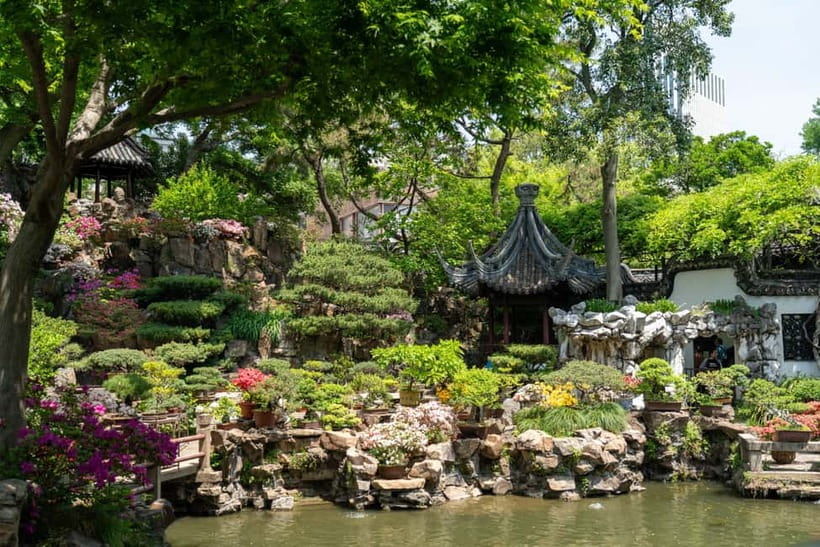
Between the temple and the tea house: the 9 Zig-Zag Bridge and Mid-Lake Pavilion
As you move through the garden-water scenery, the tour highlights the 9 Zig-Zag Bridge and the Mid-Lake Pavilion. These aren’t just scenic pauses. The guide uses them as visual anchors for the meaning of the spaces.
What I like about this kind of stop is how it balances the density of temple explanations. After learning symbols and beliefs, you get a chance to slow your eyes and notice the shapes—bridge lines, pavilion viewpoints, the way the garden layout feels designed for walking, looking, and briefly resetting your brain.
Even if you’re not a “gardens” person, this part helps you enjoy Yuyuan’s atmosphere instead of just rushing through it.
Stop 4: Lake Pavilion Tea House—small-time reflection, guided by context
The itinerary includes time at the Lake Pavilion Tea House (about 20 minutes). This is a short pause, but it’s not random. It’s placed where you’ve already absorbed temple culture, so the conversation can shift from rituals to everyday lived culture: how people treat rest, conversation, and scenic spaces as part of their cultural rhythm.
Tea-house stops are also where you can catch your breath. If your feet get tired—Yuyuan streets plus temple stairs can add up—this is a built-in moment to sit, listen, and regain momentum before the shopping and park finish.
Stop 5: Yuyuan Garden Smallware—souvenirs that feel like local craft
Then you head to Yuyuan Garden Smallware for another guided segment (about 20 minutes). This is where the tour leans into practical value: you learn what to look for when you’re browsing local crafts, and you get expert tips that help you avoid buying something that doesn’t match what you think it is.
The reviews point out that the guide’s advice and conversation make the market feel less like a chaotic retail strip. Instead, you can ask questions and get direction on what’s worth your attention.
One helpful mindset: treat this stop as a “learn first, buy if it makes sense” moment. The guide can point you toward what fits the cultural themes you just learned, which makes your souvenir feel tied to the place instead of just ticking a box.
Stop 6: Shanghai Ancient City Park—releasing the energy, finishing peacefully
The tour ends at 古城公园 (Ancient City Park). The description frames it as a calm wrap-up: ancient relics with a quieter environment, which helps you absorb the experience without the end feeling like another market rush.
Finishing in a park also helps you do something practical afterward. You’ll be in the right mood to continue exploring nearby streets at your own pace, rather than feeling like you hit the best parts already and now you’re stuck hunting for the next thing.
The best value: what you’re getting for a very low ticket price
The price shown is $2.36 per person for a 2-hour guided walk. That’s unusually low for a guided route with temple time, herb sampling, and multiple stops. The value isn’t just “cheap sightseeing.” You’re paying for interpretation—someone explains symbols, beliefs, and what you’re seeing in the right order.
Also, the tour is small group (up to 10). That matters more than people think. When your guide can answer questions and keep the pace gentle, the whole experience feels more personal. Reviews highlight this friendliness and the sense of laughter in the group, which can turn a temple tour from stiff to fun.
If you want a quick way to understand Yuyuan and the City God Temple without feeling lost in translation, this is the kind of value that makes sense.
Who should book this tour
You’ll be a good fit if you:
- Want Taoism and folk religion explained in an accessible way (not just architecture)
- Like a mix of temple culture + herb sampling + zodiac visuals
- Prefer a small group with an English guide who can answer questions
- Want a guided route that covers both lively streets and calmer garden-and-park space
You might skip it if you:
- Can’t handle walking (it’s not suitable for mobility impairments)
- Want a purely self-paced, photo-only outing (this tour is story- and explanation-driven)
Should you book: my practical take
Book it if you’re spending only a short time in the Yuyuan area and want your visit to “click.” The herb sampling and the City God Temple explanation give you two standout anchors, and the zodiac details add a memorable theme that ties the stops together.
Don’t book it if you expect a long, deep, academic-style history lecture. This is a short, friendly guided walk with multiple hands-on moments. It’s designed to help you understand what you’re looking at while you’re looking at it.
If you’re comfortable walking and you like learning through symbols, markets, and small cultural rituals, this one is an easy yes.
FAQ
How long is the tour?
It lasts 2 hours.
Is the tour guided in English?
Yes. You’ll have a live tour guide in English.
How many people are in the group?
The group is kept small, limited to 10 participants.
Where do we meet, and how do we find the guide?
You meet at Yuyuan Garden Metro Station Exit 1 (豫园站1号口). The instructions also mention looking for the red umbrella.
What are the main stops on the route?
The route includes Yuyuan Old Street, Tonghan Chuntang, City God Temple of Shanghai, Lake Pavilion Tea House, a Yuyuan Garden smallware market area, and it finishes at Shanghai Ancient City Park.
Is traditional medicinal herb sampling included?
Yes. The tour includes a sampling of traditional Chinese medicinal herbs at the traditional medicine shop.
What are the cancellation and payment options?
You can get free cancellation up to 24 hours in advance for a full refund. You can also reserve now and pay later.
More Tour Reviews in Shanghai


City Highlights, One More Way
More of Yu Garden & the Old Town

Just In: The Newest Shanghai Reviews






Yu Garden & Old Town, compared.
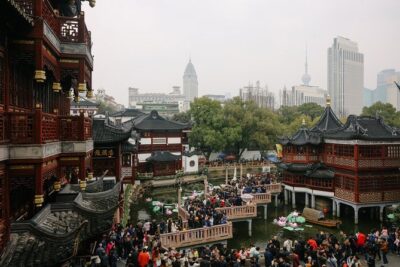 ★ 4.0Best of Shanghai Day Tour, including Jade Buddha Temple & Bund & Yuyuan GardenFrom $79338 reviews
 ★ 5.0Half-Day Bike Tour of Shanghai Old Town with Food TastingFrom $100306 reviews
 ★ 4.6Yu Garden Admission TicketFrom $16260 reviews
 ★ 4.7Yu Garden, Old Street, Bund & Zhujiajiao Water Town Bus TourFrom $60244 reviews
 ★ 5.0Shanghai Day Tour to Zhujiajiao Water Town, Yu Garden, Bazaar, BundFrom $229162 reviews
 ★ 5.0Private Yu Garden, The Bund, French Concession, Pudong Half-Day TourFrom $12051 reviews
 ★ 3.7Yu Garden Ticket+Lantern Festival Entry comboFrom $949 reviews
 ★ 4.93-Hour Old Shanghai City TourFrom $7545 reviews
Browse the lists this tour appears in