
Reviewed · JEWISH SHANGHAI & RED HISTORY WALKS
Shanghai Uncommon Historic Sites Tour
Shanghai has a way of hiding big stories in plain sight. This tour is built around uncommon places that explain why today’s Shanghai looks the way it does—colonial buildings, revolutionary landmarks, and old engineering. I especially liked the mix of French Concession architecture with sites tied to China’s political turning points, and I liked that it feels practical, not museum-stuffed.
One thing to keep in mind: you’ll be on the move for about 8 hours, and some stops are best for outdoor viewing or quick photo moments rather than long wandering. If you want lots of free time to roam on your own, you may feel a bit scheduled.
In This Review
- Key highlights you’ll actually care about
- Why this tour feels different from the usual Shanghai day
- Price and what you get for $175
- The meeting start and how to plan your morning
- Stop 1: Moller Residence in the French Concession
- Stop 2: 1933 Old Millfun and the strange path from industry to shopping
- Stop 3: Zhou Enlai’s former residence—French style and revolutionary gravity
- Stop 4: Shanghai Ancient City Wall—1553 defense lines you can still trace
- Stop 5: The Site of the Second National Congress of the Communist Party of China
- The final stop at Waibaidu Bridge: camelback truss steel in 1908
- Lunch and pacing: staying comfortable on an 8-hour route
- The guide experience: why English matters more than you think
- Who should book this tour (and who might not)
- Should you book Shanghai Uncommon Historic Sites Tour with Jennys China Tours?
- FAQ
- What time does the tour start?
- How long is the Shanghai Uncommon Historic Sites Tour?
- Is pickup included?
- What’s included in the price?
- Are tickets or admissions included?
- Is there a mobile ticket?
- Is this tour private?
- Is lunch provided?
- Can I bring a service animal?
- Is cancellation free if plans change?
Key highlights you’ll actually care about
- A private setup with only your group, so you can ask questions without competing for attention
- Dumpling lunch is included, which helps you plan the day and avoid hunting for food mid-tour
- English-speaking guidance can change everything when you’re reading history off buildings
- French Concession stops like the Moller Residence and Zhou Enlai’s former home bring context fast
- Waibaidu Bridge gives you a rare look at early steel bridge engineering in Shanghai
Why this tour feels different from the usual Shanghai day
Most Shanghai days get split between big-name neighborhoods and a few broad landmarks. This one uses a different rule: follow the buildings and the places where power, industry, and politics all left traces.
What makes it work is the combination. You start with colonial-era design in the French Concession, then you pivot into a site tied to industrial brutality, and you swing back to political history with two very specific Communist-era locations. You end with something non-political but deeply Shanghai: Waibaidu Bridge, a rare surviving example of a camelback truss bridge, plus the kind of detail that makes you see the city’s engineering story.
I also like the straightforward pacing. Each major stop has a planned window—around an hour for most locations, with shorter time for the city wall—so you get context before the day turns into a blur of photos.
More of the city's layered history, up close

Price and what you get for $175
At $175 per person for about 8 hours, this tour isn’t the cheapest way to “see some sights.” But it’s also not priced like a luxury show. The value comes from a few concrete things: hotel pickup is offered, an air-conditioned vehicle is included, and lunch is part of the package.
You’re also getting admissions and included entries at certain stops. Some locations have admission covered on the day (like the Shanghai Ancient City Wall and the Site of the Second National Congress of the Communist Party of China), while others are listed as free admission. That mix matters because it lowers the odds of you getting hit with surprise costs mid-day.
And because it’s a private tour/activity, you’re less likely to feel stuck behind a large crowd or stuck with a one-size-fits-all script. One of the best signals from the experiences I heard about: the guide can help you shape the day beyond the fixed stops—like adjusting your photo plans and giving extra route ideas in real time.
The meeting start and how to plan your morning
The tour starts at 9:00 am. That’s a good time to do Shanghai’s historic core before the heat and crowds squeeze your schedule. If you’re coming from a hotel, use that pickup option if you can. Less taxi time means more time walking and looking closely.
You’ll likely want to dress for a long day outdoors. Even with air-conditioned transport, you’ll spend real time at street-level viewing points: entrances, courtyards, bridges, and street-facing walls. Bring sunscreen, water, and wear shoes that forgive uneven pavement.
The tour uses a mobile ticket, which is convenient if you prefer not to juggle paper. And since the tour notes “near public transportation,” you’re not completely dependent on hotel pickup if your base is convenient.
Stop 1: Moller Residence in the French Concession
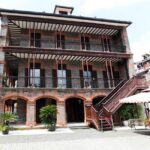
This is where the day snaps into focus: a colonial-era mansion tied to Eric Moller, built in 1936 and set in the French Concession area. The house’s design blends Gothic and Tudor-style cues, and it’s the kind of building that makes you slow down without anyone needing to tell you to.
Why I like this stop for first thing in the tour: it’s an easy entry point. Before you learn anything political or industrial, you get a feel for Shanghai’s international past—wealth, architecture imported and remixed, and a city that could support big private residences.
What to do here:
- Look at the façade details and think about what kind of wealth and networks built a mansion like this.
- Use your guide to connect the architecture to the larger story of Shanghai’s foreign settlements.
A possible drawback: if you’re expecting something like a fully staged “see every room” museum visit, you might find the time window feels brisk. Still, as an architectural introduction, it sets up everything else you’ll see.
Stop 2: 1933 Old Millfun and the strange path from industry to shopping
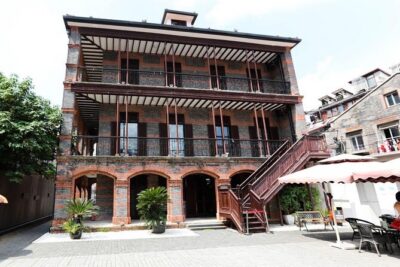
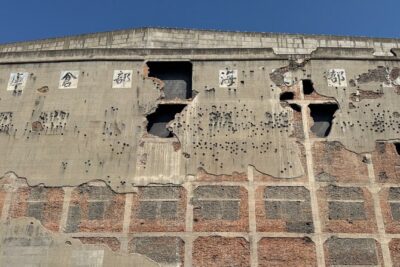
Next comes 1933 Old Millfun, a complex that looks like a restaurant and shop zone now, but carries a heavier industrial past. The site once housed the Shanghai Municipal Council Slaughterhouse, described in travel writing as the largest slaughterhouse in Shanghai. That contrast is exactly why it’s memorable: you’re seeing how a city repurposes painful infrastructure.
This stop works best if you let your imagination do a little work. The architecture and industrial layout help you picture a utilitarian facility, then you watch how modern commerce layers over the same bones. It’s not a comfortable lesson, but it’s a real one.
What you’ll likely enjoy most:
- The atmosphere of a reuse project, without pretending the past wasn’t harsh
- The chance to see “industrial heritage” in a way that feels local, not sterile
One thing to consider: this stop can be emotionally uneasy for some people because the original function involved slaughter. If you’re sensitive to that topic, decide ahead of time whether you want to spend your hour here listening closely—or just viewing and moving on.
More of the city's past, up close
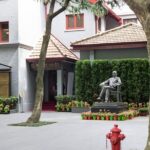
Stop 3: Zhou Enlai’s former residence—French style and revolutionary gravity
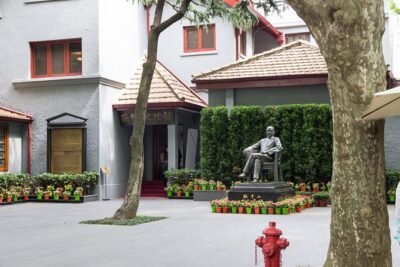
Then you shift from industry to political history with the former residence of Zhou Enlai, the first Premier of the People’s Republic of China from 1949 until his death. The house is a three-story French-style home built in the 1920s, and it carries a very different weight than the architectural stop at the start.
Why this works in the middle of the day: by now you’ve learned how Shanghai absorbed foreign influence. This residence keeps that theme, but it ties it to a Chinese figure at the center of national leadership. The building becomes a bridge between Shanghai’s cosmopolitan past and the revolutionary story that reshaped the country.
How to get the most out of the hour:
- Focus on how the home’s form and location reflect the era (not just the biography).
- Ask your guide about how Shanghai fit into national politics during the early 20th century.
From what I heard, an English-speaking guide can make a huge difference here—explaining terms and dates clearly, and giving you the “so what” behind the landmarks. One guide name that came up strongly was Peggy, praised for English ability and for helping visitors plan a unique route around the city, not just recite facts.
Stop 4: Shanghai Ancient City Wall—1553 defense lines you can still trace
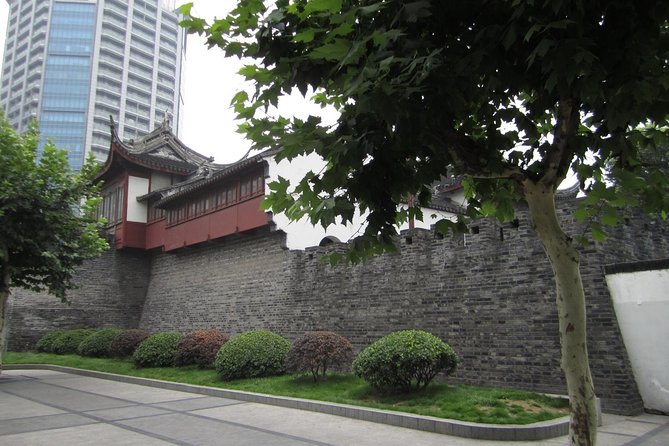
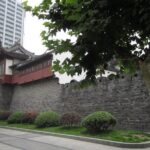
After political history, you get a physical reminder of how Shanghai defended itself. The Shanghai Ancient City Wall was built in 1553 during the Ming Dynasty to defend against Japanese pirates. You’ll learn the wall’s measured size—about 8.1 meters high—and the idea that it followed the path of what are now Renmin Lu and Zhonghua Lu.
This stop is listed as about 30 minutes, which sounds short until you realize the city wall is more about tracing alignment than doing a long hike. You’ll likely get a “walk and look” approach, with context from your guide explaining how this once functioned as a boundary.
What to do:
- Notice where the wall sits relative to modern streets.
- Use the guide’s explanation to mentally rebuild the missing sections.
The only real drawback here is time. If you want a longer, slower exploration of the wall’s remnants, the schedule may feel tight. But as a structured part of a full-day tour, it’s a smart hit.
Stop 5: The Site of the Second National Congress of the Communist Party of China
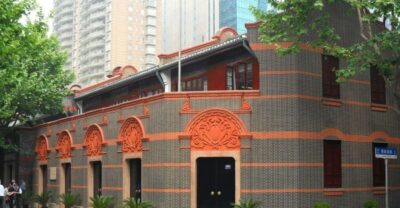
One of the most historically focused parts of the day is the Site of the Second National Congress of the Communist Party of China, held in Shanghai between 16–23 July 1922.
This matters because the congress helped confirm key direction and leadership decisions for the Communist Party during a crucial early period. And the fact that it happened in Shanghai gives you another layer: Shanghai wasn’t only about trade and foreign settlements. It also played a role in China’s political formation.
Your hour here is best used for context work:
- Ask how Shanghai’s urban environment helped shape organizing.
- Pay attention to any interpretive materials your guide points out.
- Take photos, but also spend a few minutes reading and absorbing rather than just snapping.
If your goal is to understand China’s modern history through specific locations, this stop is a strong anchor.
The final stop at Waibaidu Bridge: camelback truss steel in 1908
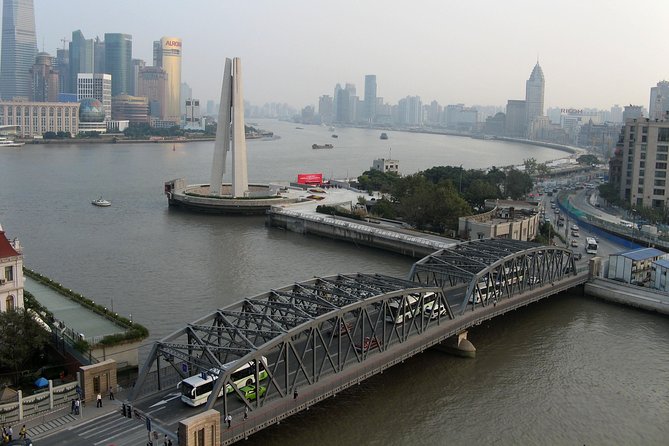
Then you end on something that’s purely Shanghai—Waibaidu Bridge, also known as the first all-steel bridge and the only surviving example of a camelback truss bridge in China. The current bridge opened on 20 January 1908.
This is the kind of stop that turns an impressive landmark into a learned story. Instead of only looking at a bridge as scenery, you start thinking about engineering choices: the structure, the material shift to steel, and why this design mattered.
Why I like ending here: it’s a breather from heavy political content. You can stand, watch traffic and pedestrians, and let the architecture and engineering details land.
Practical tip: this is a photo-friendly setting. If your guide is like Peggy-style guidance that I heard about—helping with great photos—use it. Ask where the best angles are and when the light looks good.
Lunch and pacing: staying comfortable on an 8-hour route
Good tours don’t just move you from stop to stop. They keep you comfortable enough to stay sharp.
Your lunch is an authentic dumpling lunch. That’s valuable because it’s a built-in reset. Instead of trying to time your hunger around unpredictable city schedules, you know you’ll get fed during the day. Dumplings also fit the historic theme: this is the kind of food that feels tied to local everyday life rather than a performance for tourists.
Expect a mix of indoor and outdoor time depending on the stop areas. Even with air-conditioned transport, you’ll still want to plan for walking—especially on street-level sites like bridges and walls.
If you’re sensitive to long days, it helps to pace your own energy: one stop for deeper viewing, one stop for photos and listening, and repeat. Your guide can help balance that once they understand what you care about most.
The guide experience: why English matters more than you think
One of the most praised elements of this tour is the guide experience. In particular, Peggy was called out for speaking excellent English, being easy to get along with, and taking photos that visitors can actually use. The big takeaway: language clarity changes how much you learn per hour.
This tour works because the sites have context baked into them: names, dates, political significance, and architectural details. If explanations are fuzzy, you’ll miss the connections. With strong English support, you can turn each stop into a real understanding—why it’s there, what happened, and how it links to Shanghai today.
Also, a good guide won’t just point. The best part from what I heard: she can help you plan a unique trip around Shanghai, not only stick to the preset script. That’s the difference between a checklist and a lived-in day.
Who should book this tour (and who might not)
This tour is a good fit if:
- You want historic sites in Shanghai that go beyond the most famous attractions
- You like architectural context, not just dates
- You want an English-friendly guide who can translate history into clear takeaways
- You prefer a planned day with transport, admissions (where included), and lunch handled
It might not be your best match if:
- You hate structured schedules and want full freedom between stops
- You’re only interested in one theme (like architecture only) and don’t want political or industrial topics mixed in
- You prefer long visits inside buildings over short exterior-focused viewing
Should you book Shanghai Uncommon Historic Sites Tour with Jennys China Tours?
If your idea of a great Shanghai day is “I want to understand this city in a human way,” I think this is a smart booking. You get a private-group feel, dumpling lunch, air-conditioned transport, and a set of stops that connect architecture, industry, political history, and engineering.
For value, the key question is whether $175 for an 8-hour private guided day matches what you’d spend on taxis, admissions, and food while also trying to piece together context on your own. If you’d otherwise struggle to interpret the sites, this tour saves time and gives you meaning fast.
My practical recommendation: book it if you want a day that feels different from the standard Shanghai sightseeing circuit—one where you come away with a clearer mental map of how Shanghai got made.
FAQ
What time does the tour start?
It starts at 9:00 am.
How long is the Shanghai Uncommon Historic Sites Tour?
The duration is about 8 hours.
Is pickup included?
Pickup is offered.
What’s included in the price?
Lunch (an authentic dumpling lunch), an air-conditioned vehicle, and all fees and taxes are included.
Are tickets or admissions included?
Some stops are listed with admission included, and others are listed as free admission. You’ll still have guided entry coverage where it’s specified.
Is there a mobile ticket?
Yes, the tour uses a mobile ticket.
Is this tour private?
Yes. Only your group will participate.
Is lunch provided?
Yes. You’ll have an authentic dumpling lunch included.
Can I bring a service animal?
Service animals are allowed.
Is cancellation free if plans change?
Yes, you can cancel up to 24 hours in advance for a full refund.
More Tours in Shanghai


More Tour Reviews in Shanghai
The City's Layered History
Just In: The Newest Shanghai Reviews




Jewish Shanghai & Red History Walks, compared.
 ★ 5.0Tour of Jewish Shanghai led by a Jewish History ExpertFrom $96106 reviews
 ★ 5.03-Hour Private Tour to Jewish Ghetto and Shanghai BundFrom $9069 reviews
 ★ 4.0Private 2-Hour Walking Tour of Shanghai’s Jewish GhettoFrom $13133 reviews
 ★ 5.0Red Route Tour- Chinese Communist PartyFrom $8523 reviews
 ★ 4.9Jewish Ghetto and Shanghai Bund Private TourFrom $11314 reviews
 ★ 5.0Xintiandi, CCP Museum and French Concession TourFrom $609 reviews
 ★ 5.0Shanghai Propaganda and History Walking TourFrom $735 reviews
 ★ 5.0Shanghai Hidden Histories Walking Tour: Suzhou Creek to The BundFrom $1204 reviews
Browse the lists this tour appears in