
Reviewed · TEA, CALLIGRAPHY & CHINESE CRAFTS
Hands On Chinese Cave Murals with Local Expert
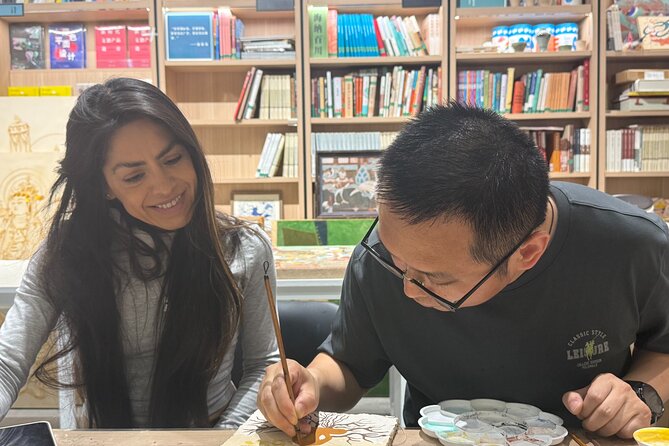
Paint murals the quiet way in Shanghai. This hands-on class focuses on Dunhuang cave murals, letting you recreate historic designs by hand instead of just watching art behind glass. I love the mineral pigments and traditional tools, because you can actually feel the methods behind the look. I also love the serene, meditative studio pace that keeps the session thoughtful rather than rushed.
The main drawback: this is a workshop, not a big sightseeing loop. You’ll spend most of your time at a desk working on your mural, so if you want lots of walking and urban views, this might feel too still.
In This Review
- Key Things To Know Before You Go
- Entering The Workshop World of Dunhuang Cave Murals
- Picking Your Motif: Buddhas, Bodhisattvas, and the Nine-colored Deer
- Mineral Pigments and Clay Boards: What Your Hands Will Learn
- The 3-Hour Flow: From Tracing to Your Own Finished Mural
- Why Dunhuang Murals Are a Smart Choice for Real Cultural Learning
- The Classroom Setting in Shanghai: Calm, Focused, and Not Too Big
- Where You Meet and How to Plan Your Day in Xu Hui
- Price and Value: Is $99 Worth It?
- Who Should Book This Workshop—and Who Might Not
- Should You Book This Hands On Chinese Cave Murals Workshop?
- FAQ
- How much does the hands-on Chinese cave murals workshop cost?
- How long is the workshop?
- Where does the workshop start, and where does it end?
- Do I get an e-ticket?
- What kind of mural designs can I choose?
- Is the class limited in group size?
- Is free cancellation available?
- Can service animals attend?
Key Things To Know Before You Go
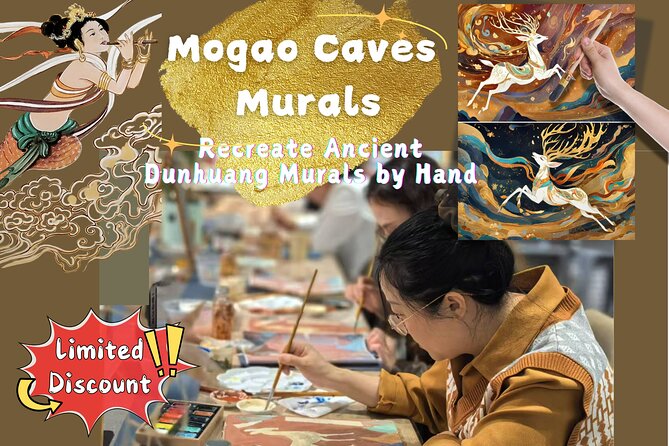
- Expert-led Dunhuang instruction centered on the art and culture behind the murals
- Choose your mural design from Buddhas, Bodhisattvas, or mythical figures like the Nine-colored Deer
- Natural materials and traditional tools including mineral pigments and clay boards
- A peaceful classroom vibe that makes the process feel slow and satisfying
- Small group size capped at 20, so the instructor can actually help when you need it
- You leave with a finished artwork made by your own hands
Entering The Workshop World of Dunhuang Cave Murals
In Shanghai, it’s rare to find a hands-on activity that feels quiet, skill-focused, and culturally grounded at the same time. This one is built around Chinese cave mural traditions connected to Dunhuang, and the payoff is not just knowledge. You leave with something you made, using methods meant to resemble old techniques.
From the start, the experience is designed to pull you into a steady rhythm: choose a pattern, trace or paint, mix colors made from natural mineral pigments, and work on a clay-board surface with tools that don’t feel like generic craft supplies. That combination matters. It turns a class into a small creative practice, the kind where time stretches because you’re concentrating on texture, line, and balance.
Sit down to more tea, brush and craft sessions

Picking Your Motif: Buddhas, Bodhisattvas, and the Nine-colored Deer
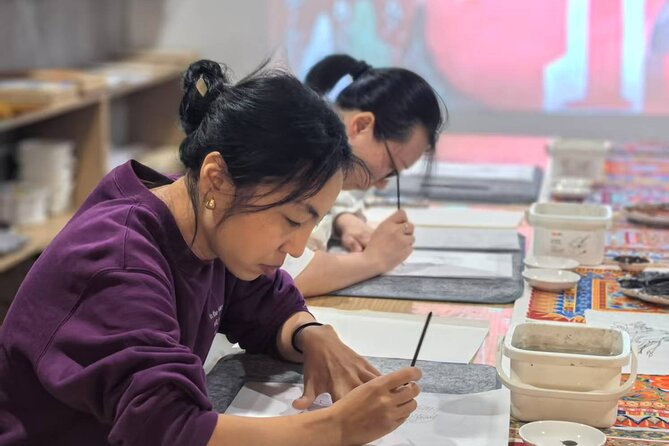
The mural options give you a meaningful range of styles to work from. You can pick from traditional subjects such as majestic Buddhas, graceful Bodhisattvas, and mythical creatures like the Nine-colored Deer from ancient Chinese folktales.
Why that choice matters for your finished piece: each subject has its own visual demands. Buddhas and Bodhisattvas often rely on calm symmetry and controlled details. Mythical creatures add a different kind of challenge because you’re thinking about color transitions and distinctive shapes. Either way, you’re not guessing blindly. The point is that you select a traditional pattern first, then bring it to life through careful tracing and painting.
Also, this is one of those workshops where the instructor’s role isn’t just to hand you tools. The class is set up so you can get guidance while you personalize the colors and finishing touches. One of the most praised parts of the experience is how patient and professional the teaching is, especially when you want to be a little creative without losing the integrity of the design.
Mineral Pigments and Clay Boards: What Your Hands Will Learn
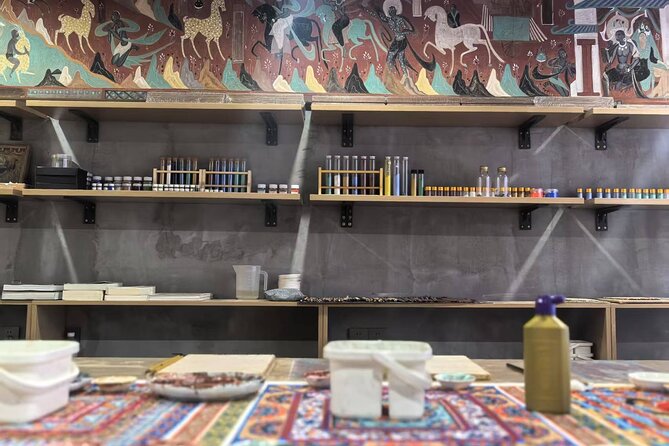
This is not a paint-by-numbers workshop. You’ll use materials meant to mimic traditional mural craft: mineral pigments, clay boards, and traditional tools. The class also supports a hands-on approach where you trace or paint your chosen mural pattern.
You’ll probably notice the difference quickly if you’ve only used modern acrylics or poster paints. Mineral pigments can behave differently in terms of texture and how the color settles. Clay boards change the feel of the surface, so brushwork doesn’t just look different. It feels different.
And there’s a practical bonus to learning with these materials: you understand why murals have that specific, grounded look. It’s not just subject matter. It’s the surface, the pigment, and the technique working together. By the end, your artwork won’t look like a generic craft souvenir. It will look like you followed a tradition.
The 3-Hour Flow: From Tracing to Your Own Finished Mural
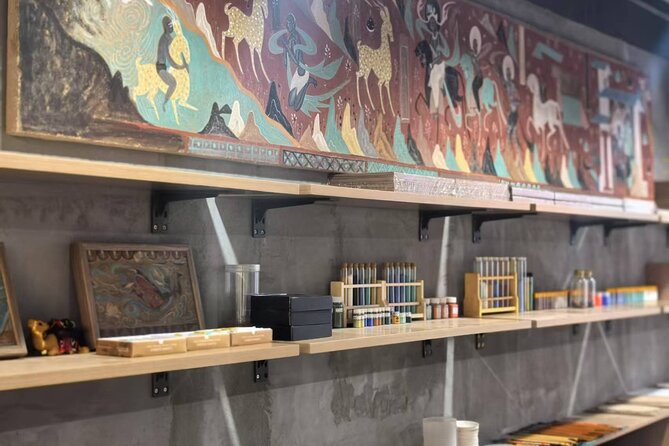
The overall duration is about 3 hours, and it moves at a workshop pace rather than a lecture pace. Here’s what the session is geared toward, step by step, based on what the class is designed to do:
First, you’ll start by selecting your mural pattern. This is where you decide what you’re aiming for—Buddha, Bodhisattva, or a mythical subject like the Nine-colored Deer.
Next comes the hands-on part: you’ll trace or paint using natural mineral pigments. Tracing helps you focus on proportion and line work. Painting is where your personal choices show up—especially with color, where you can ask for help to build tones that still match the traditional look.
Then you’ll refine your piece with the kind of careful, quiet attention that makes this workshop feel meditative. The studio atmosphere is intentionally calm, and the teaching style described by past participants emphasizes patience and practical instruction. You’re not pushed to go fast. You’re guided to do it correctly and finish with confidence.
By the time the class ends, you’ll leave with a finished artwork you made yourself—one of the strongest reasons the experience is worth the money.
Why Dunhuang Murals Are a Smart Choice for Real Cultural Learning
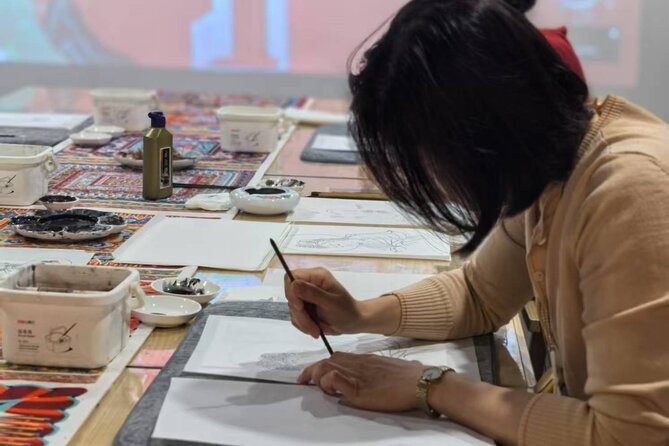
Dunhuang cave murals are a gateway subject because they connect art with spiritual themes and everyday technique. This class doesn’t treat murals like decorative wallpaper. It frames them as a cultural and artistic practice—one that requires discipline, steady hand control, and attention to how pigments and patterns work together.
You’ll get instruction that focuses on Dunhuang art and culture, and the instructor’s background in this specific tradition is a big reason people rate the experience so highly. In practical terms, it means the guidance you receive is likely to be specific instead of generic. You’re learning how to reproduce a look that has rules, not just how to copy a picture.
This is also where the quiet studio setting becomes more than ambience. When you work calmly, you can see what matters: outlines, symmetry, the effect of pigment on surface, and the way the subject’s proportions hold together. That’s the difference between taking home something that looks pretty and taking home something that feels like it came from a real process.




The Classroom Setting in Shanghai: Calm, Focused, and Not Too Big
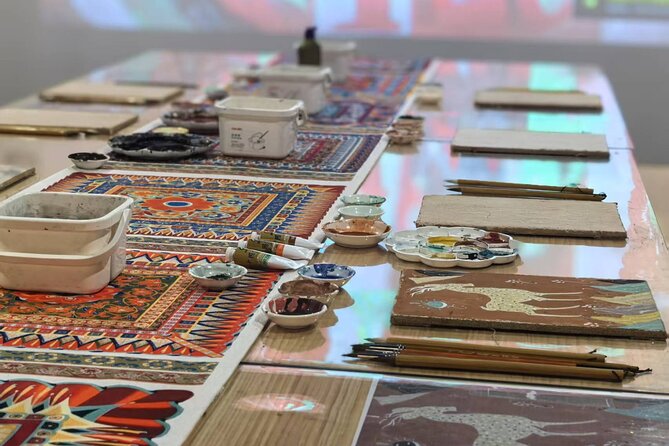
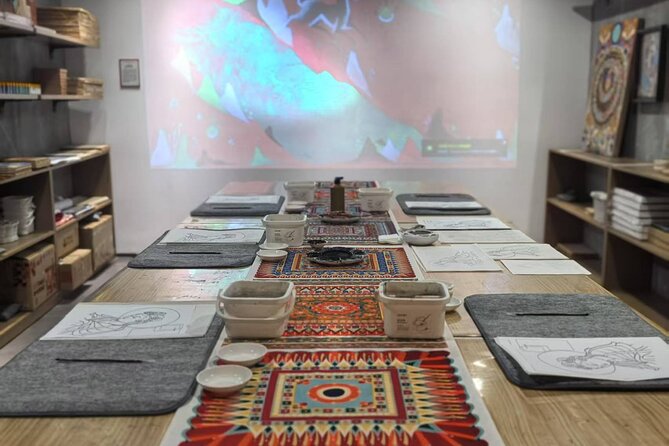
The studio is described as a quiet, serene classroom atmosphere, which is exactly the kind of environment that supports skill building. The setting helps you slow down enough to notice detail. And because the group size is capped at 20 travelers, you’re not likely to feel like one voice in a crowd.
What that means for you: you can ask questions and get targeted support. People consistently praise the teacher’s care for students and the professional knowledge behind the lessons. If you’re the type who worries you’ll fall behind, this class structure is reassuring. The goal isn’t perfection. It’s steady progress with help when you need it.
If you’re traveling with a busy schedule, this workshop can also work as a mental reset. It’s a break from hurry and sightseeing fatigue.
Where You Meet and How to Plan Your Day in Xu Hui
The meeting point is 515 Yi Shan Lu, Xu Hui Qu, Shang Hai Shi, China, 200235. The activity ends back at the meeting point.
You’ll want to build in a little buffer time because you’re heading to a studio address rather than a major landmark. The tour notes say it’s near public transportation, which is great—Shanghai makes transit easy when you’re not trying to sprint across town.
Timing-wise, the workshop duration is about 3 hours. So treat it like a focused block in your day. Plan to eat before you go or after you finish, and don’t schedule another demanding activity back-to-back unless you like rushing.
Also, the class uses a mobile ticket, so make sure you can access it on your phone at the start.
Price and Value: Is $99 Worth It?
At $99 per person for about 3 hours, the value hinges on what’s included in the learning process. This is a hands-on class with instructor guidance plus traditional materials such as mineral pigments and clay boards. You also leave with a completed artwork.
In other words, you’re paying for three things at once:
- Expert instruction focused on Dunhuang mural methods
- Physical materials and tools that shape the final look
- A finished piece that functions like a take-home art project, not just a certificate
If you love crafts, Chinese art, or you’re curious about how historical mural techniques actually translate into modern practice, this is the kind of activity that feels reasonably priced. The cost is easier to justify when you consider you’re not just watching. You’re making, guided the whole way.
If you don’t care about hands-on art and you’d rather do sightseeing, then the price can feel steep compared to quick tours. But that’s more about preference than value. This workshop is for people who want to make something with their hands.
Who Should Book This Workshop—and Who Might Not
This workshop is a great fit if you:
- Want a calmer, quieter cultural activity in Shanghai
- Enjoy drawing, painting, or structured craft work
- Like the idea of working with traditional materials such as mineral pigments
- Prefer small-group instruction and patience over a rushed class format
It might be less ideal if you:
- Want a sightseeing-heavy itinerary with lots of walking and outdoor stops
- Struggle with seated, detail-oriented tasks for a full session
- Are expecting a museum-style overview with no hands-on making
The best approach is to treat it like an art class with cultural context. If that sounds fun, you’ll likely be very happy with the outcome.
Should You Book This Hands On Chinese Cave Murals Workshop?
Yes—if you want a meaningful souvenir and a real skill-based experience. This class has a strong reputation for the instructor’s subject focus in Dunhuang art and culture, plus a teaching style described as patient and professional. The peaceful studio environment and the materials—mineral pigments and clay boards—make it feel grounded in craft, not just entertainment.
I’d book it when:
- You’re spending time in Shanghai’s Xu Hui area and want a creative break
- You like traditional motifs and want to pick between Buddhas, Bodhisattvas, and mythical figures
- You want to slow down and leave with an artwork you actually created
I wouldn’t overthink it. If you enjoy hands-on learning, this is one of the more satisfying ways to connect with Chinese mural traditions without needing special equipment or prior art experience.
FAQ
How much does the hands-on Chinese cave murals workshop cost?
It costs $99.00 per person.
How long is the workshop?
The duration is about 3 hours.
Where does the workshop start, and where does it end?
The meeting point is 515 Yi Shan Lu, Xu Hui Qu, Shang Hai Shi, China, 200235, and the activity ends back at the meeting point.
Do I get an e-ticket?
Yes, it includes a mobile ticket.
What kind of mural designs can I choose?
You can choose from traditional mural patterns such as Buddhas, Bodhisattvas, and mythical creatures like the Nine-colored Deer.
Is the class limited in group size?
Yes. It has a maximum of 20 travelers.
Is free cancellation available?
Yes. You can cancel for a full refund up to 24 hours before the experience’s start time.
Can service animals attend?
Yes, service animals are allowed. The tour also notes that it’s near public transportation and most travelers can participate.
If you tell me your travel dates and what neighborhood you’ll be staying in, I can suggest the easiest way to plan the timing around this 3-hour workshop.
More Tour Reviews in Shanghai
Tea, Brush & Craft Sessions


Just In: The Newest Shanghai Reviews








Tea, Calligraphy & Chinese Crafts, compared.
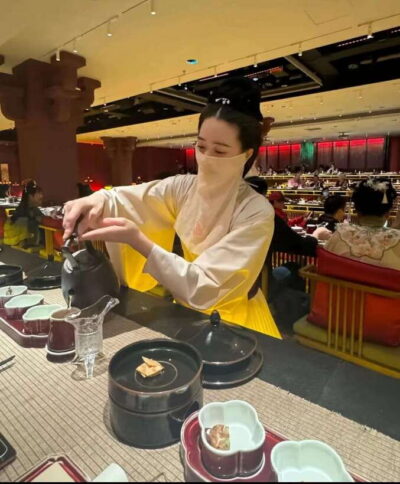 ★ 4.7Royal Banquet with Chinese Cultural PerformanceFrom $117124 reviews
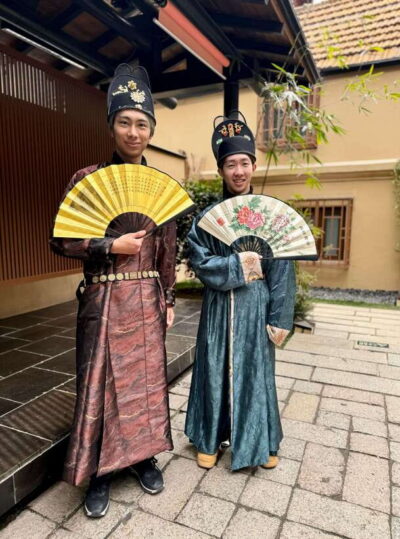 ★ 5.0Shanghai Guided Royal Banquet Photo (Incl) with Massage OptFrom $2047 reviews
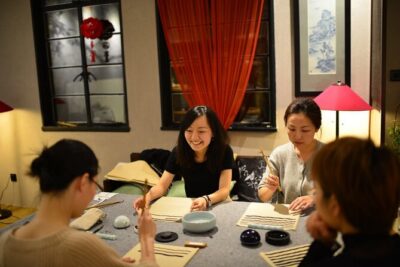 ★ 5.02-Hour Chinese Calligraphy with an Artist in Shanghai, ChinaFrom $5046 reviews
 ★ 4.5Biking Real Shanghai& Tea Tasting ExperienceFrom $8845 reviews
 ★ 5.0Zhujiajiao Water Town with Calligraphy ExperienceFrom $12517 reviews
 ★ 5.03-Hour Shanghai Yu Garden &Old Town Private Tour with Tea TastingFrom $8017 reviews
 ★ 5.02-Hour Private Chinese Ink and Brush Painting Workshop in ShanghaiFrom $11815 reviews
 ★ 5.02.5hrs Chinese Kitchen Cooking Class: Xiaolongbao Soup DumplingsFrom $9812 reviews
Browse the lists this tour appears in