
Reviewed · TEA, CALLIGRAPHY & CHINESE CRAFTS
Shanghai Mahjong Experience: Discover Art of Chinese Mahjong
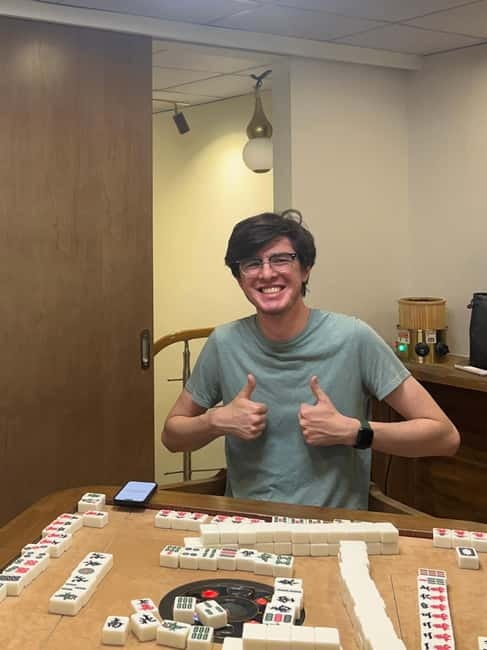
Mahjong lessons are a better Shanghai break than yet another sight. In this 3-hour session, you learn Chinese Mahjong rules with English support, then practice at the table in a real tea-house setting.
You’ll be guided step-by-step, and the biggest help for non-Chinese speakers is the private English translator, so you’re not guessing what things mean while you play.
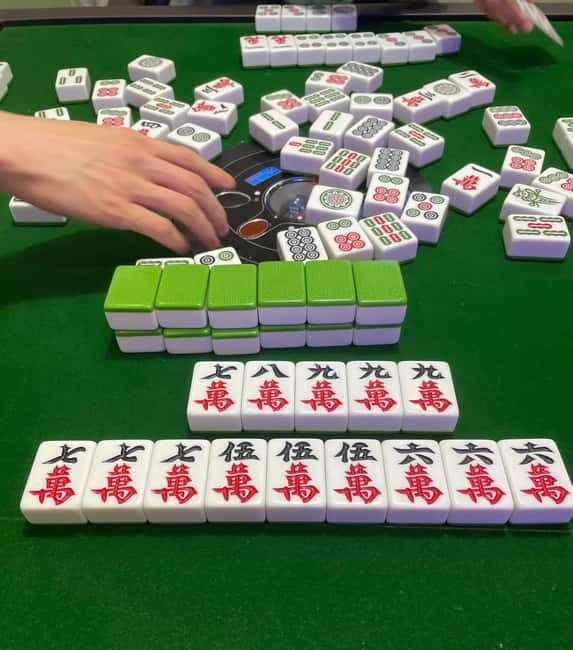
What I really like is that you don’t stop at theory. You get hands-on time with a Mahjong master, plus a chance to see how people use China’s automatic Mahjong machines.
One thing to consider: Mahjong is complicated by design, so in just three hours you may feel confident about basics and gameplay, not advanced winning strategies.
In This Review
- Key Points You’ll Care About
- Entering The Mahjong Table: Shan Xi Nan Road Tea House Location
- The 3-Hour Flow: Rules, History, and Practice Without Prior Knowledge
- Learning Mahjong From a Mahjong Master (Not a Script)
- Why Mahjong Fits Chinese Family Life So Well
- Automatic Mahjong Machines: How People Really Play Today
- Value and Price: Is $112 for 3 Hours Fair?
- How to Prepare So You Get More From the Table
- Who This Tour Is Best For (And Who Should Reconsider)
- Should You Book This Shanghai Mahjong Session?
- FAQ
- FAQ
- How long is the Mahjong experience?
- Do I need to know Mahjong before I go?
- Is the tour in English?
- Where do I meet the guide?
- What’s included in the price?
- Are drinks and food included?
- Can you help with transportation to and from the meeting point?
- Is there a cancellation option?
Key Points You’ll Care About
- English translator included, so rules and game terms make sense fast
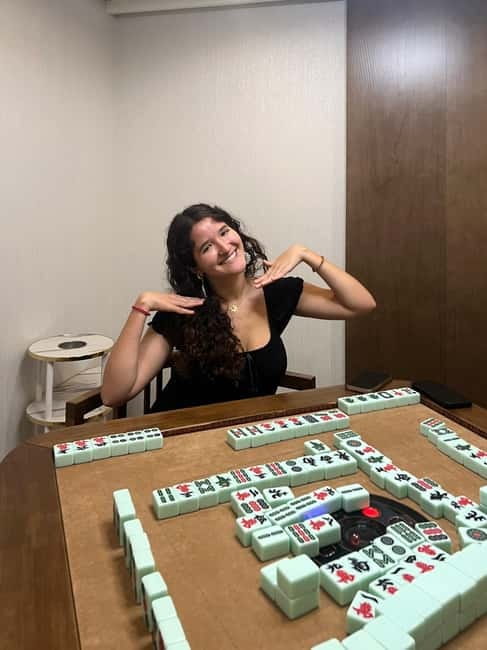
- Private 3-hour session in a real Shanghai tea-house atmosphere
- Play with a Mahjong master, not just a beginner-friendly demo
- You’ll see automatic Mahjong machines, used for both casual and more serious play
- Cultural context matters, including why Mahjong fits family life so well
Entering The Mahjong Table: Shan Xi Nan Road Tea House Location
Your experience starts in a calm, local-feeling corner of Shanghai—No. 327 Shan Xi Nan Road at Chinese Tea & Bar. The area is tied to the old French Concession, and it’s close to Tianzifang, so it’s a nice change of pace after big sights.
If you’re arriving by metro, there’s also a meeting option at Jia Shan Road Exit No. 2 of Metro Line 9/12 first.
This matters because where you learn Mahjong changes how you learn it. A tea-house isn’t a classroom; it’s a social space, which is exactly what Mahjong is in real life.
And if you’re the type who learns better with a little atmosphere around you, you’ll likely feel more comfortable once the table comes out and everyone settles in.
One practical note: drinks and food aren’t listed as included. That said, the tea-house setting is part of the appeal, and you may find tea service during your visit. Either way, plan to be flexible and don’t treat this as a full meal stop.
Sit down to more tea, brush and craft sessions
The 3-Hour Flow: Rules, History, and Practice Without Prior Knowledge
You don’t need Mahjong experience to start. The structure is built for beginners, with instruction covering the basics, how the tiles work, and how to play.
The translator’s role is important here: you’ll understand the game mechanics and the terms as you go, rather than trying to memorize vocabulary on the fly.
First comes comprehensive Mahjong instruction. Expect the instructor to walk you through the basics of gameplay—how to read the set, how moves work, and what you’re aiming for during a hand.
This is where you get your footing, and it’s also where people often discover the real challenge: Mahjong asks you to think several steps ahead, not just react.
Then you shift into culture and context. You’ll learn why Mahjong has been such a durable part of Chinese life, including its place in family gatherings and celebrations.
You’ll also hear about Mahjong’s history, including the idea that it originated in the Qing Dynasty and evolved into a widely played pastime that crosses generations.
After that, you’ll play. The heart of the experience is the time at the table with a professional Mahjong master, where you can apply what you learned with live coaching.
This is the stage where things start to click, because you’re not just learning rules—you’re learning judgment: when to follow a plan, when to adjust, and how to react to what’s happening around you.
Learning Mahjong From a Mahjong Master (Not a Script)
There’s a big difference between watching someone explain Mahjong and actually sitting down to play with the people who know it. This tour is built around the second option.
You don’t only get a teacher talking at you—you get hands-on practice guided by a master who can correct your timing and help you make better choices.
What’s valuable for you is the coaching style. For beginners, Mahjong can feel like a wall of rules. When the master helps you connect those rules to real moves, it stops being abstract.
And when you’re part of the action, the game’s logic starts to feel like a system rather than a puzzle that depends on luck.
Also, you’ll be able to ask questions in a way that feels natural. The English translator is there for a reason: you can focus on decisions at the table instead of trying to interpret fast explanations.
That support is especially useful if you want to understand not just what to do, but why that move matters in that moment.
Why Mahjong Fits Chinese Family Life So Well
Mahjong isn’t only about winning. It’s about time together. That’s the part I’d pay attention to if you want more than a fun game session.
This experience explicitly covers why Mahjong is often considered an essential activity for family gatherings, celebrations, and community social life.
The way Mahjong works encourages conversation and bonding. Even when people are serious about play, the game creates a shared rhythm—hands, pauses, tea breaks, and the ongoing story of the session.
If you’re visiting Shanghai and you want one small slice of daily culture, Mahjong is a practical one. It’s not a performance for tourists; it’s how people actually spend time with each other.
You’ll also get the cultural “why” behind the game’s endurance. You learn about how it evolved from earlier origins through later centuries, and why it remains popular today.
In other words: you get a sense of Mahjong as living culture, not a museum artifact.
Automatic Mahjong Machines: How People Really Play Today
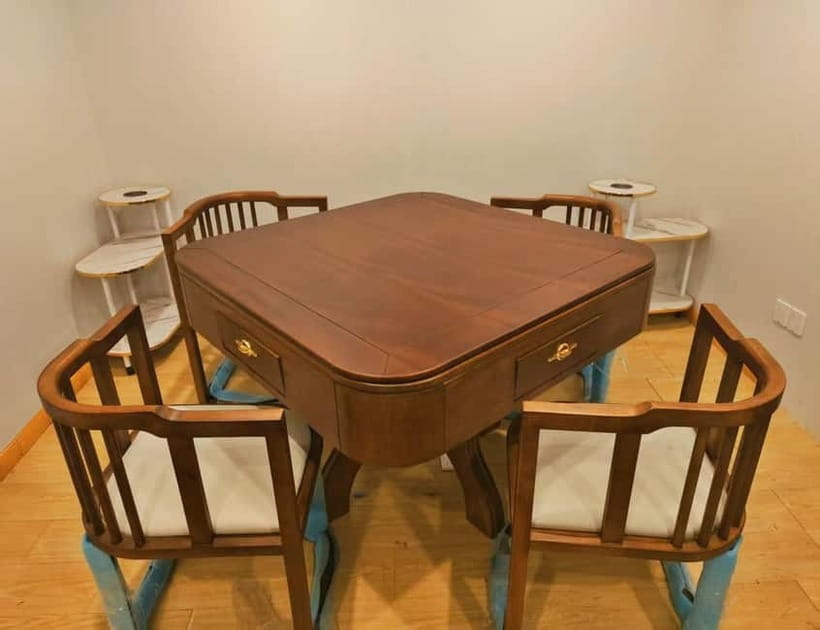
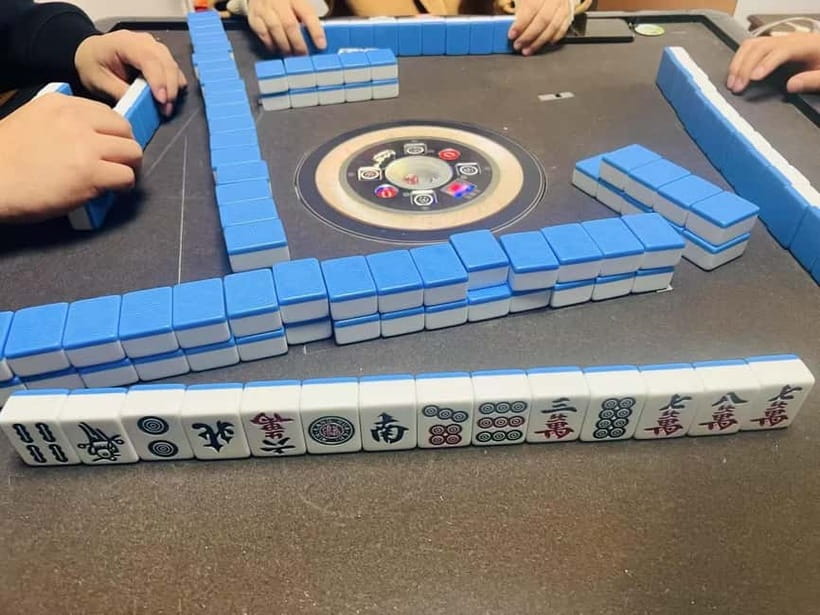
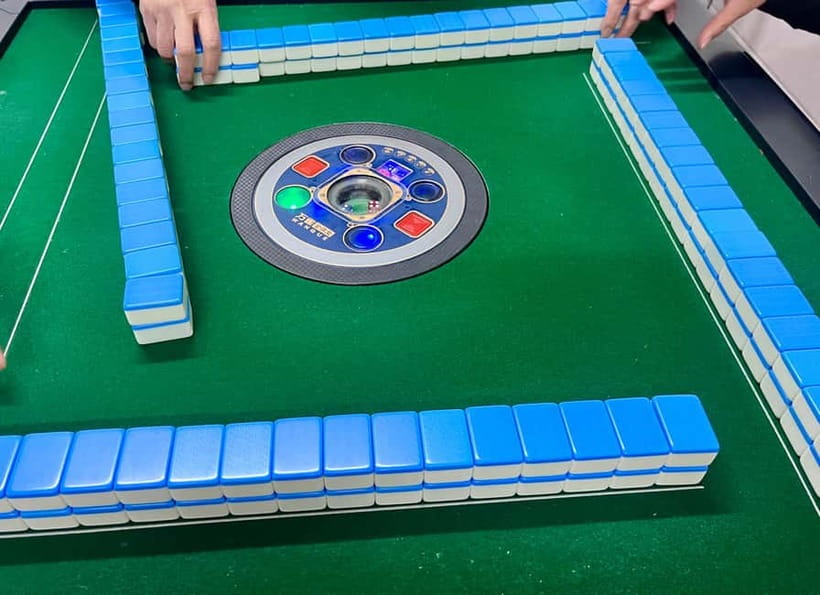
One of the most interesting parts is that you’ll experience China’s automatic Mahjong machines. These machines are commonly used in both casual and competitive settings.
That means you’re not learning only an old-school version of Mahjong—you’re seeing how the game fits modern life.
Pay attention to the practical angle. Machines can change how hands are managed and how play moves along, and that affects your experience as a learner.
When you try the automatic setup, you quickly learn whether you’re thinking about tiles correctly and how fast the game keeps moving once you’re in the flow.
This matters for your expectations. If you’re picturing only handmade tiles and slow pacing, the automatic machines show you a different rhythm.
And if you later try Mahjong on your own, you’ll recognize that the game can be played with different systems depending on where you are—home gatherings, casual venues, or more competitive environments.






Value and Price: Is $112 for 3 Hours Fair?
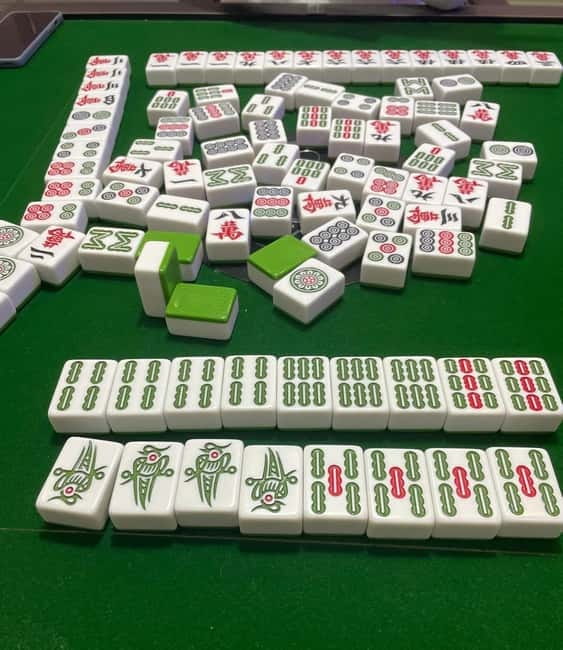
At $112 per person for a 3-hour private group, the value depends on what you want out of the experience. You’re not just paying for a classroom lesson. You’re paying for instruction, translation, and time at the table with a Mahjong master.
You’re also getting a cultural setting in a tea house and exposure to automatic Mahjong machines.
Here’s how to think about it. If you only cared about learning rules, a lower-cost group class might work. But if you want real-time coaching plus English translation so you can keep up with the flow of play, the price starts to make sense.
The private setup also helps because Mahjong improves when you get immediate feedback—especially when you’re learning the basics.
If you’re the kind of traveler who loves skills that stick, this is a good match. You’re likely to leave with something you can explain, teach, and reuse later.
And because the lesson is short, it’s best for people who want a focused cultural activity now, not a multi-day training program.
How to Prepare So You Get More From the Table
You can show up without Mahjong knowledge, but you’ll get more out of it if you do a little mental prep.
Bring patience for a game that has multiple layers, and be ready to learn by doing—because Mahjong doesn’t work well when it’s only studied.
Wear something comfortable for sitting and leaning over the table. You’ll be watching tiles closely and switching attention between the instructor, the translator, and your hand.
And if you want to ask questions, think about what’s confusing you: terminology, hand structure, or decision-making. Those are the topics that usually unlock the fastest progress.
Since drinks and food aren’t included, plan your timing for a snack beforehand or after if you need it.
If tea service happens during your visit, treat it as a bonus, not something you must plan around.
Who This Tour Is Best For (And Who Should Reconsider)
This experience fits you best if you want a structured introduction to Mahjong, with English support that keeps the game from becoming a guessing game.
It’s also ideal if you like culture that involves real social interaction, because Mahjong in a tea-house setting is about more than just rules.
You’ll also enjoy it if you’re curious about how traditional games adapt to modern life—automatic machines are part of the story here.
And because it’s described as wheelchair accessible, it can work for a wider range of travelers, though you should always ask in advance if you have specific mobility needs.
You might reconsider if you’re looking for a long strategy course or a deep mathematical scoring workshop. This is a beginner-friendly 3-hour experience that prioritizes understanding and playing, not mastery.
If you want the kind of training that takes months, you can still start here—but treat it as your first confident step, not a full tournament-level transformation.
Should You Book This Shanghai Mahjong Session?
If you want one memorable Shanghai activity that mixes hands-on gameplay with cultural meaning, I’d book it. The strongest reason is the combination of English translation, instruction, and playing with a Mahjong master—all in a real tea-house setting.
For travelers who want to leave with a skill (not just photos), this is exactly that kind of experience.
I’d also book it if you’re curious about how Mahjong looks in practice today, not only how it’s described historically. The chance to experience automatic machines is a practical bonus that makes the learning feel current.
Book it if: you like interactive learning, you want a social cultural activity, and you’re happy to take Mahjong one step at a time.
FAQ
FAQ
How long is the Mahjong experience?
It runs for 3 hours. Starting times depend on availability.
Do I need to know Mahjong before I go?
No. The tour is set up for beginners and you don’t need prior knowledge.
Is the tour in English?
Yes. The live guide provides English translation/support during the experience.
Where do I meet the guide?
You meet the guide at No. 327 Shan Xi Nan Road at Chinese Tea & Bar, or at Jia Shan Road Exit No. 2 of Metro Line 9/12 first.
What’s included in the price?
The price includes comprehensive Mahjong instruction and professional English translation/guide support.
Are drinks and food included?
No. Drinks and food are listed as not included.
Can you help with transportation to and from the meeting point?
Transportation is not included, but pick-up and drop-off can be arranged upon request for an additional cost.
Is there a cancellation option?
Yes. You can cancel up to 24 hours in advance for a full refund.
More Tour Reviews in Shanghai
Tea, Brush & Craft Sessions


Just In: The Newest Shanghai Reviews








Tea, Calligraphy & Chinese Crafts, compared.
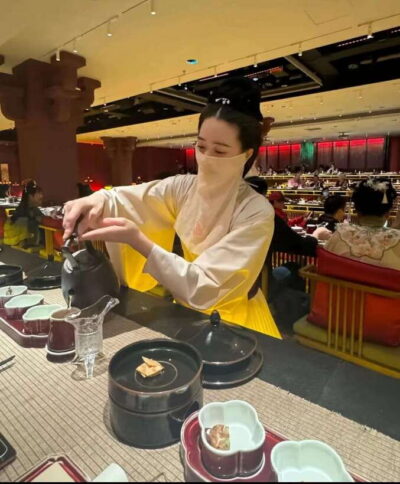 ★ 4.7Royal Banquet with Chinese Cultural PerformanceFrom $117124 reviews
 ★ 5.0Shanghai Guided Royal Banquet Photo (Incl) with Massage OptFrom $2047 reviews
 ★ 5.02-Hour Chinese Calligraphy with an Artist in Shanghai, ChinaFrom $5046 reviews
 ★ 4.5Biking Real Shanghai& Tea Tasting ExperienceFrom $8845 reviews
 ★ 5.0Zhujiajiao Water Town with Calligraphy ExperienceFrom $12517 reviews
 ★ 5.03-Hour Shanghai Yu Garden &Old Town Private Tour with Tea TastingFrom $8017 reviews
 ★ 5.02-Hour Private Chinese Ink and Brush Painting Workshop in ShanghaiFrom $11815 reviews
 ★ 5.02.5hrs Chinese Kitchen Cooking Class: Xiaolongbao Soup DumplingsFrom $9812 reviews
Browse the lists this tour appears in