
Reviewed · XIAOLONGBAO & DUMPLING CLASSES
Make Soup Dumpling: Vegan or Pork in Shanghai Shikumen
You’ll never look at dumplings the same way again. This hands-on xiao long bao class lets you learn dough, wrappers, fillings, and the famous 18-fold pleat in Shanghai’s lane-house kitchen setting.
What I like most is the clear choice built into the class: vegan or pork soup dumplings, based on what you want to eat. The second big win is Chef Yin’s coaching style, with step-by-step guidance that helps you correct your folds in real time, not just follow along.
One thing to consider: the venue sits in a Shikumen lane-house area, and the workshop room can be a little tricky to spot at first. The class provides a detailed route description, but you’ll want to plan a few extra minutes so you don’t start rushed.
In This Review
- Key things to know before you go
- Choosing Vegan or Pork Xiaolongbao in a Shikumen Lane Kitchen
- 2.5 Hours of Skill: Dough, Wrappers, and the 18-Fold Pleat
- Dough making with a water-to-flour target
- Wrapper crafting and the thickness trick
- Shaping with the iconic 18-fold
- Fillings You Control: Vegan Mushrooms vs Pork with Aspic
- Vegan filling: cooked in-class, built for umami
- Pork filling: mixed raw, then steamed safely later
- Steaming in Bamboo Baskets and Eating with Vinegar, Ginger, and Tea
- Price, Value, and What the Included Items Really Mean
- Logistics in Shanghai Shikumen Lanes: Finding the Studio and Showing Up Ready
- Who This Class Is Best For (and Who Might Skip It)
- Should You Book This Vegan or Pork Xiaolongbao Class?
- FAQ
- Can I choose vegan or pork for the dumplings?
- How long is the class?
- Is there an option to make both fillings?
- What’s included in the price?
- Which languages will the instructor teach in?
- Is free cancellation available?
Key things to know before you go
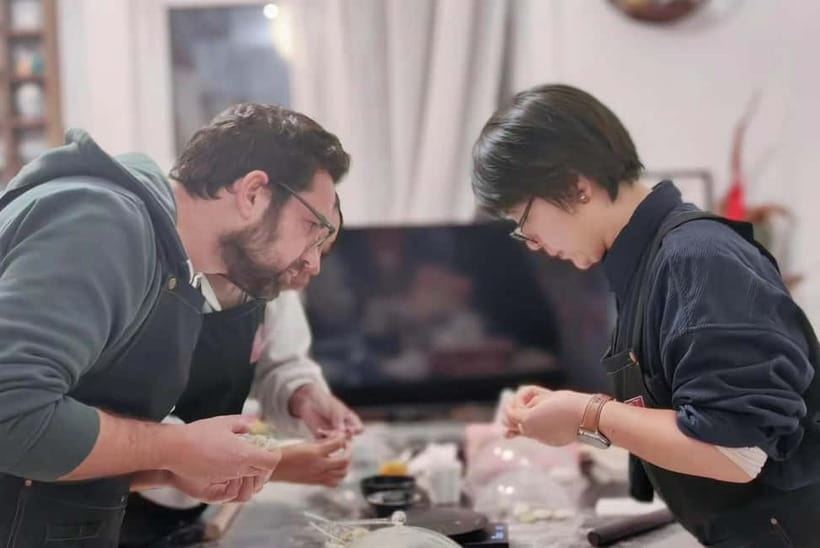
- Choose vegan or pork as your base option, then steam and eat your own dumplings
- Learn the 18-fold pleating technique with direct, hands-on correction
- You make dough and wrappers from scratch, including the right thickness for soup retention
- Filling style matters: vegan requires in-class cooking, while pork uses raw filling mixed with aspic
- The class takes place in a Shikumen lane house kitchen setting, not a typical cooking studio
- You can upgrade to a dual filling add-on (+$20/person) with 30 extra minutes
Choosing Vegan or Pork Xiaolongbao in a Shikumen Lane Kitchen
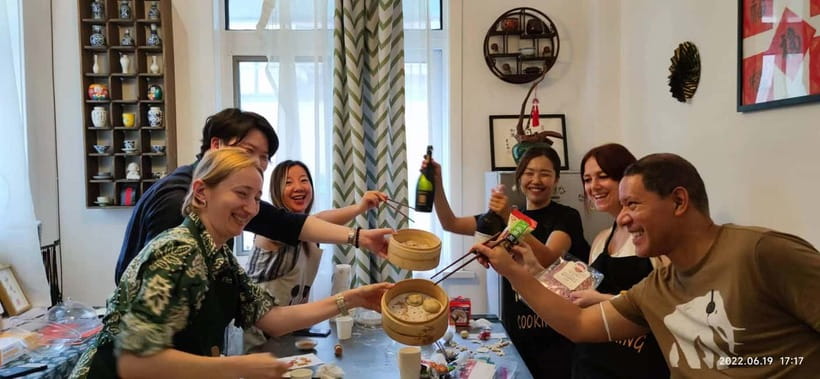
This class is built around one simple idea: you learn by doing. You start with basic dough and wrappers, then move into fillings and shaping, so by the time the bamboo baskets hit the steamer, you understand what makes soup dumplings work.
The setting is part of the point. Cooking in a Shikumen lane house kitchen changes the vibe from a modern demo to a lived-in food space, with Chef Yin sharing tea and food stories tied to Shanghai. It’s the kind of context that makes the technique stick.
You also get a real menu choice. You’re not forced into vegan or pork; you pick one for the base price. If you love variety, there’s a dual-filling add-on that lets you make both.
Pleat your own xiaolongbao at another class
2.5 Hours of Skill: Dough, Wrappers, and the 18-Fold Pleat
The timing is tight in the best way. In about 2.5 hours, you cover the core mechanical skills that most people skip when they just order soup dumplings.
Dough making with a water-to-flour target
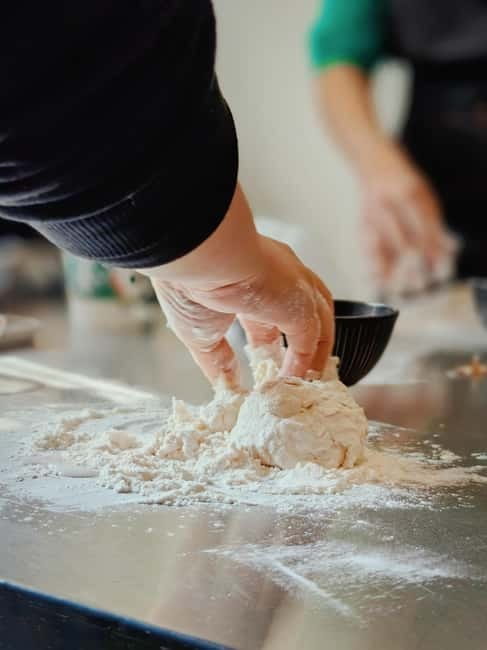
You begin by crafting your soup dumpling dough from scratch. Chef Yin demonstrates the precise water-to-flour ratio for the elastic texture you need for pleating. Then you knead and rest the dough under guidance, because rest time affects how easily the wrapper stretches without tearing.
What this means for you: if your dough ever turned sticky or resistant when you tried at home, this class fixes the root cause. You’re not guessing.
Wrapper crafting and the thickness trick
Next comes wrappers. You roll translucent, palm-sized sheets using traditional techniques. Chef Yin explains why wrapper thickness matters: the center and edges aren’t the same thickness on purpose, and that balance helps the dumpling hold the soup.
This is one of those details that sounds small until you steam. Thin where it needs to be thin, thicker where it needs to seal, and suddenly your dumplings don’t leak.
Shaping with the iconic 18-fold
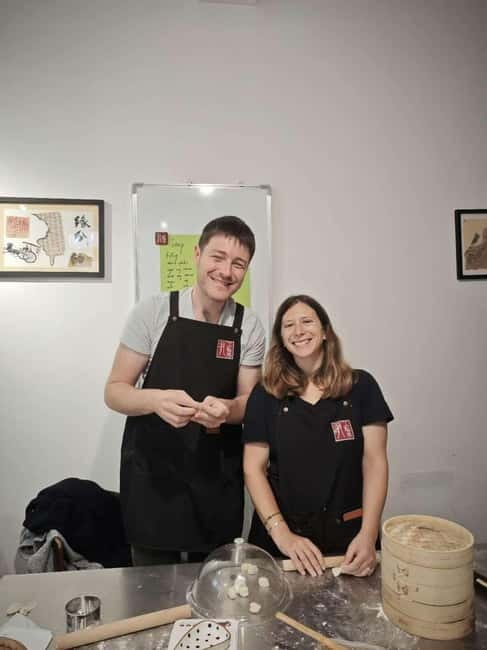
Then you get to the headline moment: mastering the 18-fold pleating technique. Chef Yin guides your hand movements for twisting, sealing, and forming the crown shape. You get real-time corrections so your pleats close properly and the dumpling stays intact during steaming.
Be ready for a little frustration at first. Pleating isn’t hard because you lack skill; it’s hard because your fingers need feedback. That’s why this class is worth doing with a teacher rather than watching videos alone.
More Shanghai plates worth chasing



Fillings You Control: Vegan Mushrooms vs Pork with Aspic
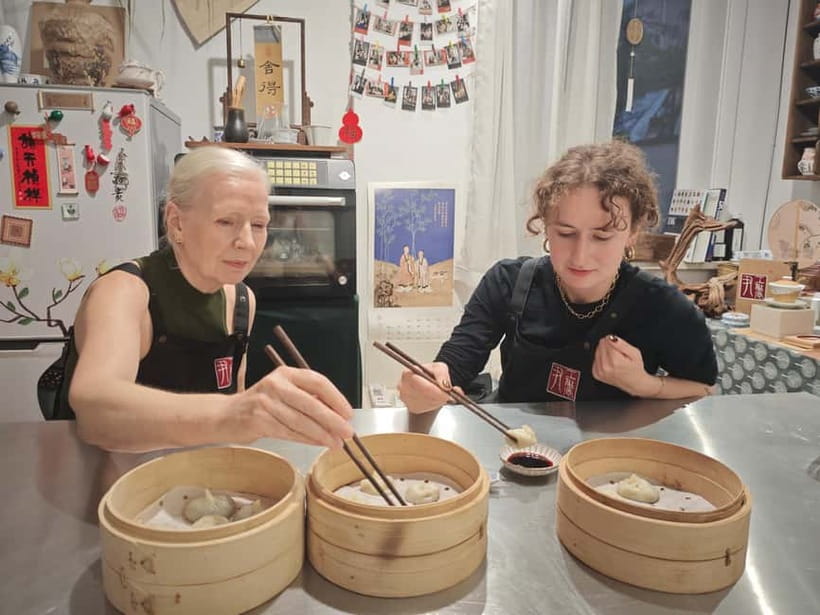
Your base price includes one filling, and you choose which one you want in class.
Vegan filling: cooked in-class, built for umami
If you choose vegan, you cook the aromatic filling from scratch during the session. You’ll sauté mushrooms and vegetables with broth to build a deep savory base. Since this part happens live in the classroom, you’re learning how texture and flavor come together, not just assembling a pre-made mix.
If you’ve ever had vegan dumplings that taste like they’re missing the point, this setup targets that problem by focusing on savory broth and aromatics.
Pork filling: mixed raw, then steamed safely later
If you choose pork, you mix raw minced pork with ginger, scallions, and aspic (gelatinized broth). The key idea is that the aspic firms up so the filling can become a soup when steamed.
This isn’t a “cook everything first” style. You’re working with raw filling that later gets steamed, and the course frames it as raw in the mixing stage followed by safe steaming later.
Steaming in Bamboo Baskets and Eating with Vinegar, Ginger, and Tea
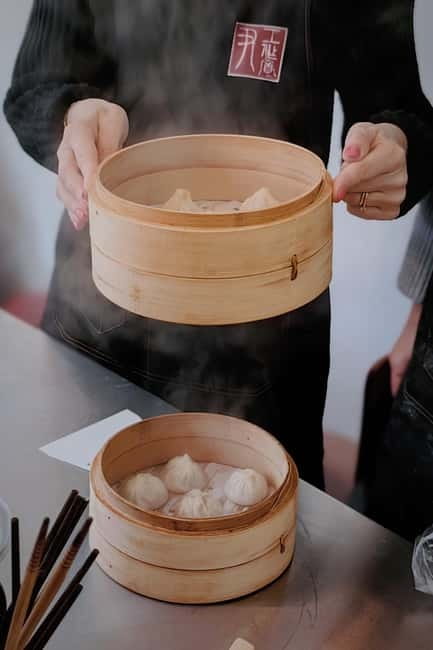
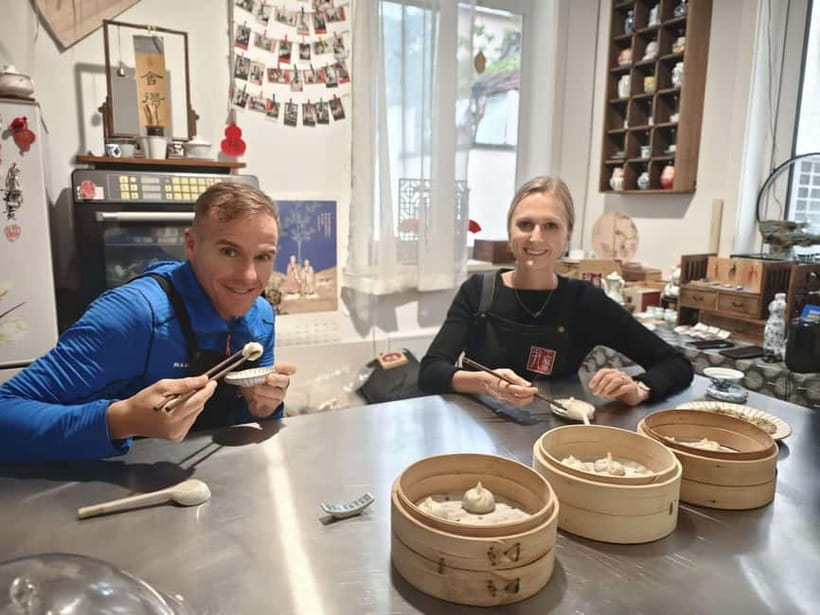
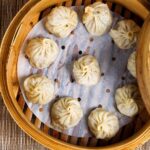
After shaping, you steam your soup dumplings in bamboo baskets. This is where your earlier choices pay off. Dough strength, wrapper thickness, seal quality, and filling balance all show up in the final result.
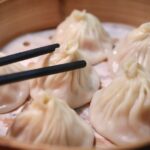
When it’s time to eat, the class doesn’t leave you guessing. You enjoy your dumplings with black vinegar and ginger, paired with tea. It’s a classic pairing that helps you taste the dumpling itself rather than drowning it in sauce.
You’ll also take home recipes to help you repeat the method later. That matters because the goal isn’t just one meal; it’s getting you to the point where you can remake the technique at home and improve with each batch.
Price, Value, and What the Included Items Really Mean
The class runs about $120 per person for 2.5 hours, with the base price including materials and tools, good quality tea, and a studio gift. You also get one filling option (vegan or pork) and the coaching needed to shape and steam your dumplings.
Here’s the value angle. You’re paying for three things that are hard to recreate on your own:
- Dough + wrapper technique (ratios, resting, thickness control)
- Correct pleating (the 18-fold method with corrections)
- A real teaching environment where mistakes are fixable in the moment
So even if you’re an experienced home cook, you’re not paying just for food. You’re paying for the process that makes the food work.
There’s also a useful add-on: the dual filling add-on (+$20/person). It lets you make both vegan and pork dumplings side-by-side and extends the session by 30 minutes. If you like comparing flavors or you’re cooking for a group with different preferences, this is the most satisfying upgrade.
Logistics in Shanghai Shikumen Lanes: Finding the Studio and Showing Up Ready
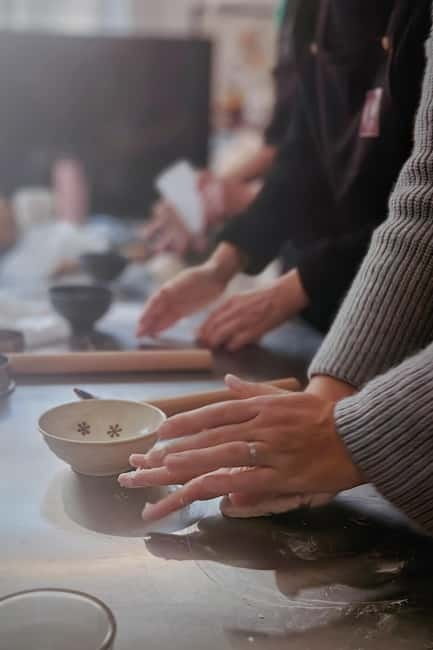
Shikumen lanes are charming, but they can be confusing for first-time navigation. The course takes place in a lane-house setting, and the workshop room can be hard to locate quickly.
The good part is the support. You’ll receive a detailed description (including video guidance) so you can find the place. In addition, Chef Yin can meet you at the street, so you’re not stuck wandering in circles.
One practical tip that really helps: don’t arrive starving. The class is hands-on and time-consuming, and if you show up very hungry, it can stretch the wait until you finally get to steam and eat.
If you’re planning transport, note that personal transportation isn’t included. Build time into your schedule so you arrive calm and ready to knead dough instead of rushing with sweaty hands.
Who This Class Is Best For (and Who Might Skip It)
This is a great match if you want real technique, not just a meal. You’ll like it if you enjoy cooking as a skill, and if you want to learn why soup dumplings behave the way they do.
It’s also a strong fit for couples, friends, or anyone who likes a shared project. You and your group can compare your pleats and learn together, especially around the 18-fold shaping.
You might skip it if your main goal is only to eat soup dumplings with minimal effort. This is not a shortcut. It’s a skill workshop, and the experience is about building dumplings from the ground up.
Should You Book This Vegan or Pork Xiaolongbao Class?
Book it if you want to leave with more than a full stomach. You’ll go home understanding how to control dough texture, wrapper thickness, and seal quality, plus you’ll get guidance on the 18-fold pleat that most people find intimidating.
Choose vegan if you want a savory mushroom-and-vegetable filling cooked during class, and choose pork if you want the classic ginger-scallion profile built with aspic for soup formation. If you’re undecided—or you want to compare both styles—consider the dual filling add-on for the extra 30 minutes.
The only reason to hesitate is logistics. If you dislike navigating small lanes and you’re arriving without time for a detour, plan ahead using the route guidance so you don’t waste the first part of your class trying to find the doorway.
FAQ
Can I choose vegan or pork for the dumplings?
Yes. The base class includes one filling, and you choose either vegan or pork xiaolongbao.
How long is the class?
The duration is 2.5 hours.
Is there an option to make both fillings?
Yes. There’s a dual filling add-on that lets you make both vegan and pork dumplings. It costs +$20 per person and adds 30 minutes to the session.
What’s included in the price?
Materials and tools are included, along with good quality tea and a studio gift. The base price also includes one filling.
Which languages will the instructor teach in?
The instructor speaks English, Japanese, and Chinese.
Is free cancellation available?
Yes. You can cancel up to 24 hours in advance for a full refund.
More Shanghai Plates
More Tour Reviews in Shanghai




Aprons On for Xiaolongbao
Just In: The Newest Shanghai Reviews











Xiaolongbao & Dumpling Classes, compared.
 ★ 4.9Cooking Dumpling & Meal in Local Family-w/VeganFrom $8236 reviews
 ★ 5.0Secret Noodle and Wonton in Shanghai Alleyways with Local BeerFrom $7919 reviews
 ★ 5.0Private Home Cooking Class with Shanghai MamaFrom $19914 reviews
 ★ 5.02.5hrs Chinese Kitchen Cooking Class: Xiaolongbao Soup DumplingsFrom $9812 reviews
 ★ 4.8Dragon Beard Candy Making with a ChefFrom $386 reviews
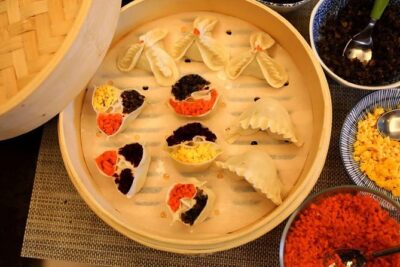 ★ 4.52.5hrs Chinese Kitchen Cooking Class: Art Steamed DumplingsFrom $1095 reviews
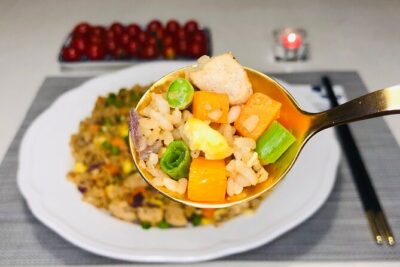 ★ 4.5Online Cooking Class Fried Rice by Sunflower LiFrom $205 reviews
 ★ 5.0Zhujiajiao and Yu Garden Tour with Wonton Making in ShanghaiFrom $2294 reviews
Browse the lists this tour appears in