
Reviewed · THE BUND SKYLINE WALKS
Shanghai Hidden Histories Walking Tour: Suzhou Creek to The Bund
Shanghai changes fast, but the streets don’t forget. This Suzhou Creek to The Bund walk is built for slow looking, thoughtful listening, and reading the city’s layers the way a local would.
I especially love how history shows up in real places—bullet-scarred walls, old steel bridges, and repurposed riverfront buildings that still carry meaning. I also like the pace: you’re not forced through sights like a checklist, and the stories feel like conversation, not a script.
One possible drawback: because the walk leans reflective and architecture-focused, it may feel less fun if you’re expecting big, flashy landmarks at every minute.
In This Review
- Key things to know before you go
- Suzhou Creek to The Bund: a different kind of Shanghai walk
- Pricing and timing: what $120 buys you
- Meeting point and the easy way to orient yourself
- Stop 1: Sihang Warehouse Memorial Museum and the 1937 story
- Yanqingli: preservation that works because it’s used
- A treaty-port-era clue stop: Shanghai’s gateway in architecture
- Stop 3: Zhapu Road Bridge (Zhapulu Bridge) and steel from 1907
- Stop 4: Waibaidu Bridge, built 1908, and the sense of thresholds
- Stop 5: The Bund (Wai Tan) at walking pace
- Group size, vibe, and why questions matter here
- What’s included (and what you should budget for)
- Practical tips for a comfortable riverside history walk
- Should you book the Suzhou Creek to The Bund Hidden Histories tour?
- FAQ
- FAQ
- How long is the Shanghai Hidden Histories walking tour from Suzhou Creek to The Bund?
- What is the price per person?
- Is museum admission included for Sihang Warehouse Memorial Museum?
- Where do I meet the guide?
- Where does the tour end?
- What time does the tour start?
- Is transportation included?
- What’s included in the tour fee?
- Is there a cancellation window if my plans change?
Key things to know before you go
- Small group size (max 6) keeps the tone intimate and question-friendly.
- Charlotte’s storytelling ties the Suzhou Creek industrial and wartime past to what you see on the Bund today.
- Old steel bridges in sequence (Zhapu Road Bridge and Waibaidu Bridge) help you track change over time.
- Yanqingli shows how preservation can work when spaces become cafés, galleries, and studios.
- Museum stop needs a plan since admission is not included for Sihang Warehouse Memorial Museum.
- You get a digital citywalk map plus a group photo or self-portrait option if you request it.
Suzhou Creek to The Bund: a different kind of Shanghai walk
If you’ve only seen Shanghai from wide angles, this tour helps you see it from street level. The route is designed around Suzhou Creek’s role in trade, industry, and conflict, then it gradually pulls you toward the Bund’s treaty-port facade.
What makes it work is the way the guide connects details. You’re not just told what a building is. You learn what it was used for, what it symbolized, and why it matters that it survived.
And yes, it’s still Shanghai. You’ll be walking among neighborhoods and river views that feel very much alive. But instead of rushing to the next photo, you’ll be encouraged to slow down and notice.
Keep walking the Bund and the waterfront

Pricing and timing: what $120 buys you
At $120 per person for a 3 to 4 hour small-group walk, the value is in the guide time and the “why” behind what you see.
This isn’t a museum-ticket-heavy experience. Most stops are outside or in free-access areas, and you’re paying for interpretation: a licensed local, English-speaking guide who can explain how the city’s transformation shows up in materials, street patterns, and architectural cues.
It’s also not the kind of tour you can do well on your own without a guide. Sure, you can read plaques and Google images. But the difference here is that the walk is built to connect those clues into a single story: wartime resilience and industrial growth on one side, colonial-era commerce on the other, all anchored by the river corridor.
One small practical note: it’s listed as starting at 3:00 pm, so you’ll likely catch late-afternoon light along the water. That’s great for comfort and photos, but it can also mean a few crowds near popular riverfront areas.
Meeting point and the easy way to orient yourself
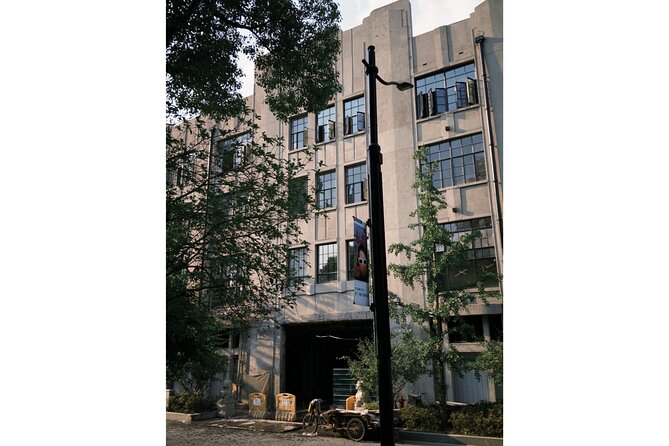
You’ll start at 245 Xin Zha Lu, Huangpu District, Shanghai (200071). From there, the tour ends near the Bund promenade, at Swatch Art Peace Hotel Waitan (200002).
That ending matters because the Bund is a natural “hang out” zone. After the tour, you can keep wandering on your own with a better sense of what you’re looking at, instead of feeling like you’re just walking past famous facades.
Also, the tour provides a digital citywalk map. That’s a nice touch because once you learn the route logic, you can re-walk parts of it or connect it with nearby stops.
Stop 1: Sihang Warehouse Memorial Museum and the 1937 story
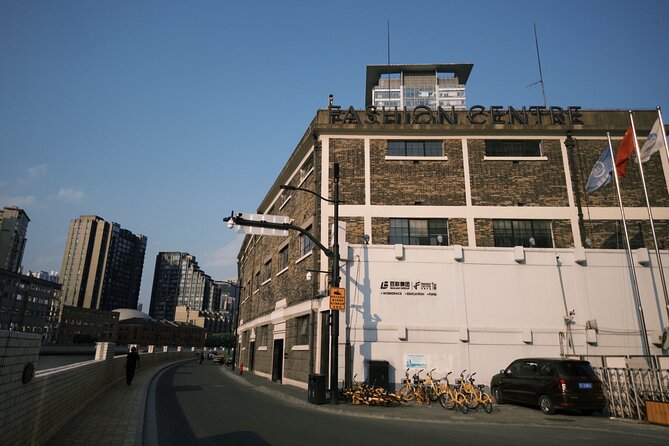
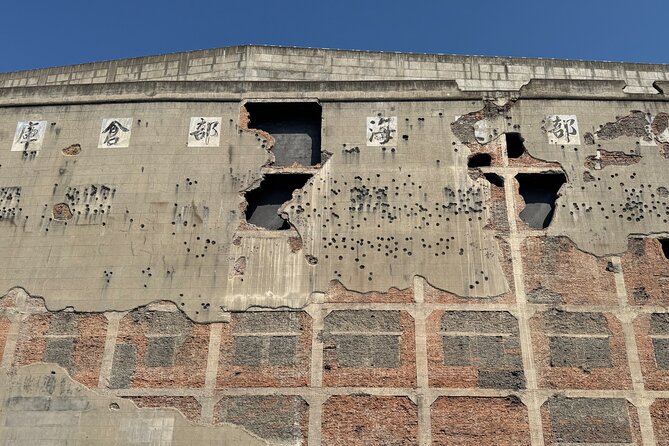
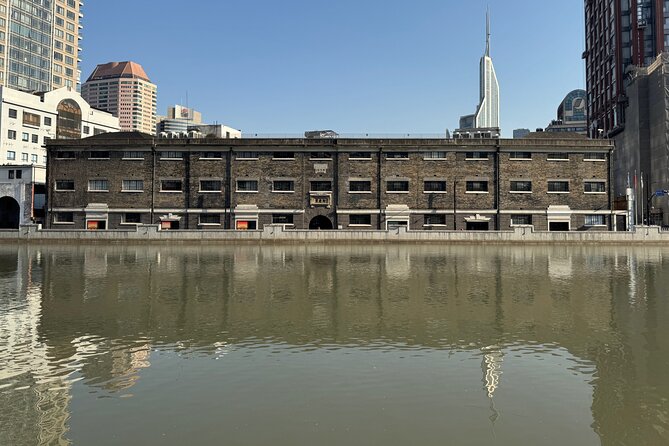
The walk begins with a solemn moment: the Sihang Warehouse Memorial Museum by the river.
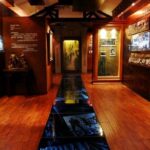
This is where the tone shifts from sightseeing to something heavier. The memorial is tied to the 1937 fighting at the site, and you’ll stand before the bullet-scarred walls that recall how a group of Chinese soldiers held their ground. The effect isn’t just educational—it’s emotional in a quiet, grounded way.
What you’ll get from this stop is perspective. Suzhou Creek isn’t just scenic. Historically, it was tied to shipping routes, strategic edges of the city, and the way conflict can shape an urban landscape.
Practical consideration: museum admission is not included. You’ll want to plan for that cost if you’re going in.
Yanqingli: preservation that works because it’s used
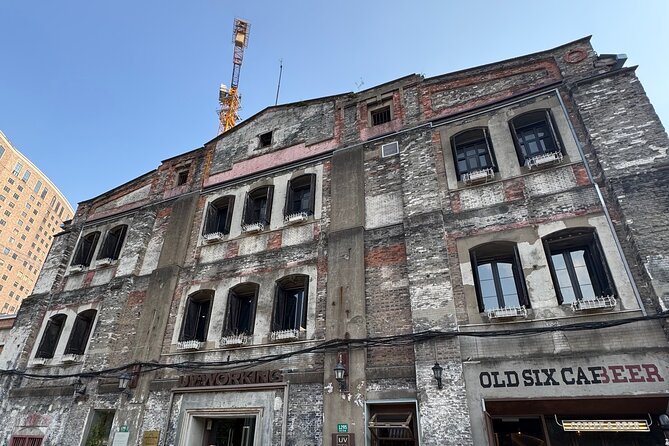
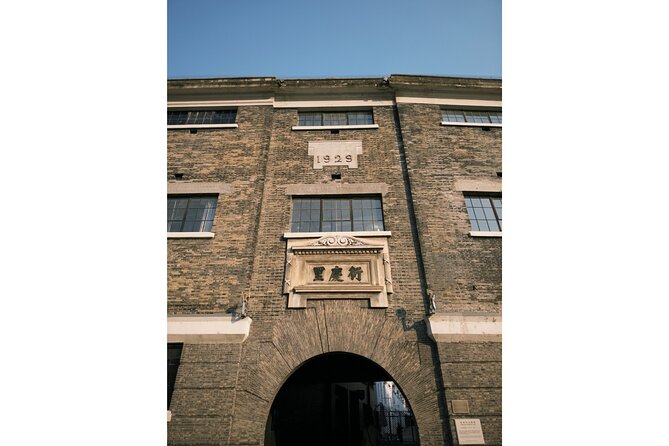
After the memorial, you head toward Yanqingli, a place that keeps the past while letting the present have a voice.
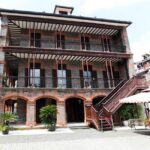
What I like here is that preservation isn’t treated like a glass case. Instead, renovated spaces hold cafés, galleries, and studios. That turns the area into something you can actually experience, not just photograph.
And because the stop is only about 5 minutes, it isn’t a time sink. It’s more like a quick lesson in Shanghai’s approach to survival: keeping something recognizable, then giving it a new daily rhythm.
One tip for this part of the walk: treat it like a visual assignment. Look for what feels original and what feels newly adapted. That contrast is the point.
More garden mornings out in Suzhou

A treaty-port-era clue stop: Shanghai’s gateway in architecture
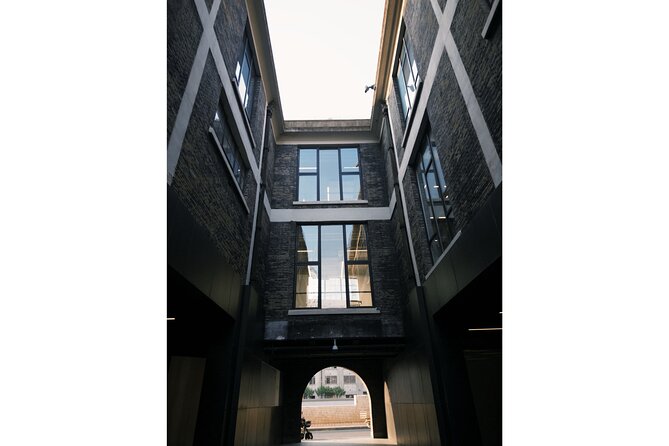
Midway through the route, you’ll reach a building stop tied to Shanghai’s treaty-port era—the time when the city became a communication and commerce hub for international exchange.
The key idea is symbolic: Shanghai as a gateway for people, trade, and ideas. You’re not just looking at old brick or a decorative facade. You’re learning how architecture can signal openness, status, and control, depending on who built and used the space.
This is also one of those “you’ll be glad you listened” moments. If you rush, you’ll miss the guide’s connections between exterior clues and how the building functioned in that era.
Stop 3: Zhapu Road Bridge (Zhapulu Bridge) and steel from 1907
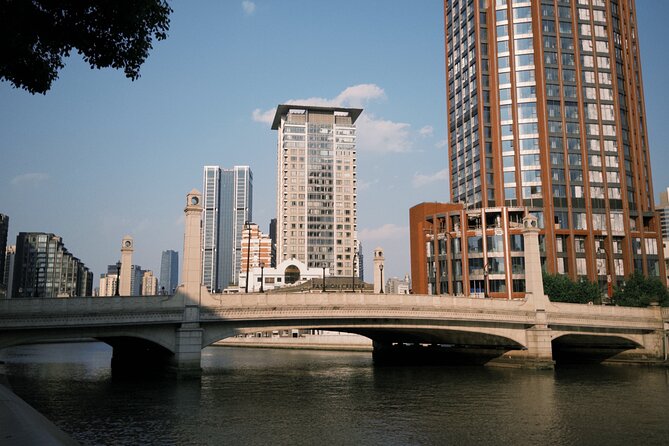
Next comes engineering history you can actually see in front of you: Zhapu Road Bridge, also known as Zhapulu Bridge.
It’s described as one of the oldest surviving steel bridges over Suzhou Creek, built in 1907. The tour frames it as an important connector between commercial hubs—an arterial link between areas like Hongkou and Huangpu—and you’ll learn how crucial river crossings were for the city’s commercial life.
Why this bridge stop is worth your attention: bridges are time machines. When a city rebuilds around them, the bridge becomes a reference point. It helps you trace how Shanghai’s riverfront logic evolved rather than just noting that it changed.
You’ll likely be given a few moments to look at the structure and surrounding river corridor before moving on.
Stop 4: Waibaidu Bridge, built 1908, and the sense of thresholds
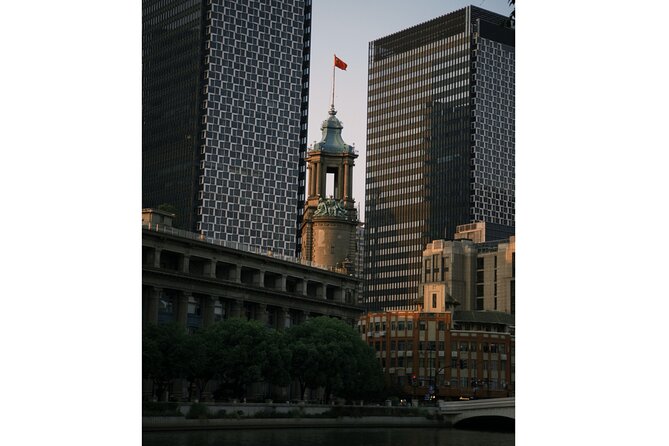
Then you reach Waibaidu Bridge, built in 1908—Shanghai’s first all-steel bridge and the oldest surviving one in the city.
This bridge is positioned where Suzhou Creek meets the Huangpu River, which makes it more than a crossing. It becomes a symbolic threshold: one river system feeding into another, one historical phase giving way to the next.
If you’re an architecture fan, this is one of the most satisfying stops. Steel dates the city. The bridge’s style and survival make it feel like a grounded anchor while the skyline keeps changing.
It also sets you up perfectly for the Bund, because it turns your attention from the modern riverfront to the long continuity of movement and commerce.
Stop 5: The Bund (Wai Tan) at walking pace
Finally, you arrive at The Bund (Wai Tan)—and it’s treated as more than a promenade.
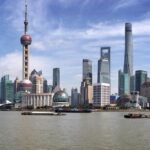
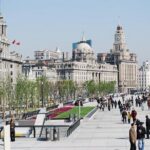
The Bund is described as the face of modern Shanghai history, with grand colonial-era buildings along the west bank of the Huangpu River. The buildings once housed banks and trading houses, and the tour helps you see them as institutions, not just scenery.
Here’s what I like about this approach: the guide doesn’t just point out that the architecture is pretty. You learn why it mattered that these structures lined the river: they represented the treaty-port economy in physical form.
You’ll also get a fresher perspective on the area. Some tours treat the Bund like a photo stop. This one treats it like a narrative endpoint. The river bridges and memorials weren’t separate chapters; they were the lead-in.
One more detail that shows up in the tour experience is food talk. In the walk, Charlotte shares suggestions and local delicacy highlights. Based on what I was told in the group dynamic, she’s the kind of guide who doesn’t just explain history—she also nudges you toward tasting the city in a thoughtful way. If you want that, this tour is a good match.
Group size, vibe, and why questions matter here
The max group size is 6 travelers, and you’ll feel that immediately. The tour doesn’t have the rushed momentum of big groups, and it’s easier to ask about architecture, time periods, or what you’re seeing around the next corner.
The vibe is calm and reflective. That doesn’t mean slow and boring. It means you’ll spend more time looking at fewer things, which is honestly how the city rewards you.
Also, since you’ll be walking for 3 to 4 hours, it’s smart to treat this as an activity with one job: learn and observe. If you try to multitask, you’ll miss the connections.
What’s included (and what you should budget for)
Included items are straightforward:
- Coffee and/or tea: one complimentary coffee at a selected café, or one bottled water per person upon request
- Digital citywalk map
- Group photo or self-portrait option if you request it
- Licensed local English-speaking guide
Not included:
- Museum admission for the Sihang Warehouse Memorial Museum
- Meals and snacks (you can stop at cafés on your own)
- Private transportation to and from the meeting point
So when you look at the price, you can think of it like this: you’re paying for guide-led interpretation, plus small “comfort” items like the drink and map, while you handle any museum ticket and your own snacks.
That structure tends to work well for visitors who prefer flexible food choices rather than a fixed meal plan.
Practical tips for a comfortable riverside history walk
This is a walking tour, and it’s scheduled in late afternoon. A few small things will make it easier:
- Wear shoes you trust on city sidewalks and bridge approaches.
- Bring water, even if you plan to request the bottled option. Riverside days can still feel warm.
- If you care about photos, plan to pause occasionally. The route is designed for stopping and looking, not sprinting.
- Since the tour ends near the Bund hotel area, have an easy next step in mind: continue along the promenade or branch into nearby streets with your map in hand.
The tour also lists moderate physical fitness as a requirement, so if you’re unsure about your endurance, decide based on your comfort with 3 to 4 hours of walking.
Should you book the Suzhou Creek to The Bund Hidden Histories tour?
Book it if you want Shanghai with meaning, not just landmarks. The biggest draw is the way Charlotte’s guide style links wartime legacy and industrial river life to the treaty-port symbols you see along the Bund. If you enjoy architecture and street-level history, this walk will feel satisfying.
Consider skipping (or pairing it with something more high-energy) if your ideal Shanghai day is constant motion, big-ticket stops, and minimal thinking. This tour is quiet and story-driven. It’s excellent at that job, but it’s not trying to be an adrenaline ride.
If you do book, go in with the right mindset: you’re not collecting photos. You’re collecting clues. And once you do, the Bund reads like a chapter of a much longer river story.
FAQ
FAQ
How long is the Shanghai Hidden Histories walking tour from Suzhou Creek to The Bund?
It runs about 3 to 4 hours.
What is the price per person?
The tour costs $120.00 per person.
Is museum admission included for Sihang Warehouse Memorial Museum?
No. Admission is not included for the museum stop.
Where do I meet the guide?
You meet at 245 Xin Zha Lu, Huangpu District, Shanghai 200071.
Where does the tour end?
The tour ends at Swatch Art Peace Hotel Waitan, Huangpu, China 200002 near the Bund promenade.
What time does the tour start?
The start time is 3:00 pm.
Is transportation included?
No. Private transportation is excluded, so you’ll need to get yourself to the meeting point.
What’s included in the tour fee?
The tour includes a licensed local English-speaking guide, a digital citywalk map, a complimentary coffee or tea (or bottled water upon request), and a group photo or self-portrait upon request.
Is there a cancellation window if my plans change?
The policy listed is free cancellation. You can cancel up to 24 hours in advance for a full refund.
The City's Layered History
More Garden Days in Suzhou

More of the Bund & the Waterfront
Just In: The Newest Shanghai Reviews





The Bund Skyline Walks, compared.
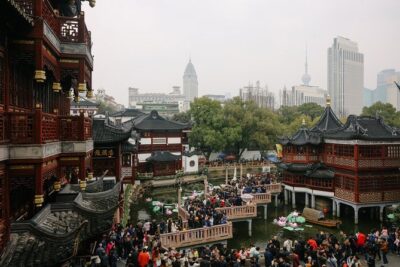 ★ 4.0Best of Shanghai Day Tour, including Jade Buddha Temple & Bund & Yuyuan GardenFrom $79338 reviews
 ★ 4.7Yu Garden, Old Street, Bund & Zhujiajiao Water Town Bus TourFrom $60244 reviews
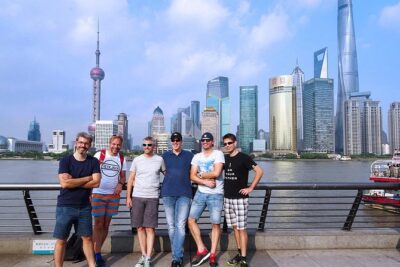 ★ 5.0Shanghai Day Tour to Zhujiajiao Water Town, Yu Garden, Bazaar, BundFrom $229162 reviews
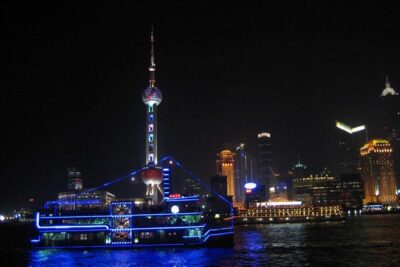 ★ 4.0Huangpu River Cruise and Bund City Lights Evening Tour of ShanghaiFrom $79115 reviews
 ★ 5.03-Hour Private Tour to Jewish Ghetto and Shanghai BundFrom $9069 reviews
 ★ 5.0Private Yu Garden, The Bund, French Concession, Pudong Half-Day TourFrom $12051 reviews
 ★ 5.03-Hour Shanghai Bund Swift Tour with River Cruise or SkyscraperFrom $11226 reviews
 ★ 5.0Customized Private Tour in Shanghai The Bund Yu Garden ZhujiajiaoFrom $515 reviews
Browse the lists this tour appears in